

Has your mind ever glitched with too many tasks at hand? Have you ever found it hard to process too much information during a meeting? Have you tried multitasking but failed at it? This is cognitive overload at work, a lag in our working memory.
It can affect employees' mental wellness to a great extent. Their daily job life as well as personal life can get severely affected.
Let's imagine the daily life of Sia, a social media executive in a fast-paced tech company. Her job is to manage all social media posts, create content, monitor engagement and growth on the platforms, and communicate with her boss regularly.
Despite repetitive meetings and briefings, she keeps forgetting tasks. Her postings get delayed, and her content strategy is lagging. Hence, she is overloaded with too many tasks at once. This is decreasing her productivity level.
Okay, now that the meaning is a bit clearer, let's ask why it happens. Why does our mind lag? Neurological science has demonstrated a very direct answer: Our brains are not wired to focus on two tasks at once.
In this blog post, I will explain the meaning, the various causes, the impact, and some strategies to overcome cognitive overload. So, keep reading.
What is Cognitive Overload?

Cognitive overload is mental exhaustion that occurs when our working memory is clogged with too much information. When the limit of our brain's working memory is exceeded, our productivity and workability decline.
Our working memory is responsible for holding and processing information when we perform a cognitive task. Therefore, it is important to consider its limit to avoid any mental malfunctions.
So, how does cognitive overload at work happen and affect the job? I have seen many of my colleagues glitch and malfunction when they have to work on more than one task at a time. As I mentioned above, our brains are only capable of carrying out one task at a time.
Hence, an overload of working memory can particularly affect our mental health, performance, productivity, and job quality.
I have also witnessed cognitive malfunctioning or overload in interns and first-time employees. As they have to manage work-life balance and learn skills simultaneously, they malfunction. Therefore, managing cognitive overload at work is crucial.
What Causes Cognitive Overload at Work?
The root statement is that our brain is a complex organ. It controls our actions, creates memories and emotions, processes information, and reacts to them.
It can process information to an extent received in various methods like reading a book, listening to a podcast, tasting a new dish, and feeling a new emotion. Cognitive overload happens when the information received is too much for it to process.
It has the most chances of creeping up at work as we deal with various kinds of information at once. Before it threatens our workability and productivity, the individual and the management must take care of it.
Some prominent factors that have caused cognitive overload in people (me included) at work.
1. Time Management Issues

Time has always posed problems for employees at work. Meeting a deadline becomes more complicated than usual when you have more than one task at hand. A Microsoft study found that 68% of employees claim they do not have enough time to focus on important matters.
This leads us to conclude that poor time management can burden employees with more tasks. Procrastination and doom scrolling at work can also result in cognitive overload, as they leave tasks pending.
2. Multitasking is a Productivity Killer

Our brains struggle to switch between tasks. This is the leading cause of cognitive overload, and one of the fastest routes to brain fog at work that chips away at decision-making quality.
Despite the common consensus that multitasking is an advanced art, it is a productivity killer. Focusing on more than one task takes up a lot of our concentration, reducing our workability.
3. Complicated Tasks
We always come across complex tasks at work once in a while. They are to challenge our capabilities and push our boundaries.
But they also use up a lot of our brain's cognitive or working memory. This can lead to brain fog and a lag in productivity, which I mentioned above.
4. Toxic Work Culture
A toxic and unhealthy work culture can effectively reduce productivity. Cognitive overload can happen if a single person is burdened with more tasks than his working capacity.
A UK-based company called Oak Engage conducted a thorough survey. They found that 73% of the UK workforce claimed that a toxic culture had led to burnout. 71% of those employees also said that they would rather choose to work from home to avoid a toxic work environment.
5. Lack of Organization

Cognitive overload at work can also result from a lack of organization. The organization here means how you prioritize your tasks, to-dos, and even the files and assets on your desk.
Research shows that disorganization and mess can lead to cognitive overload. Our brains, like order and visual clutter, can block our cognitive resources and reduce our ability to focus.
Surprisingly, the research also suggested that 77% of people in cluttered and disorganized spaces are more likely to be overweight.
6. Insufficient Breaks
Like a machine in a factory, our brain also needs regular breaks or time off. Constant work can clog our cognitive resources, leading to malfunctioning working memory. Therefore, breaks are absolutely necessary to maintain a high productivity level.
A Vantage Fit podcast guest put it in a way that makes this easy to picture:
"In as little as 10 minutes, you can completely get your body into that relaxation response. Ten minutes can make a world of difference."
— Claudia Grace, Corporate Health and Wellness Coach | Listen to the full episode
A brief pause like that can steady your breathing, ease built-up tension, and bring your attention back with more clarity, helping you move through the rest of your work with better energy.
Cognitive Load Theory
The Cognitive Load Theory (CLT), put forth by John Sweller in the 1980s, was based on the limitations of our brain's working memory in learning. It highlighted structural methods to reduce working memory overload to enhance the learning process.
Some Signs & Symptoms or Impact of Cognitive Overload at Work

Most people keep functioning or malfunctioning unproductively, believing that it is normal, especially in a corporate job. Here are some symptoms that may suggest that your cognitive resources are being stretched.
1. Increased Stress
The first and foremost symptom of cognitive overload is increased stress. This includes increased cortisol levels, pain in the back of the neck, soggy eyes, and anxiety. Stress also affects sleep quality and overwhelms the brain, even with simple chores or tasks.
2. Reduced Productivity
The other main sign that you are having a cognitive overload at work is your reduced productivity. If you could do X number of tasks before and now you do way less than that number, your productivity has been hit.
Employers usually take measures like health benefits for employees, different wellness programs, and others to tackle employees' reduced productivity and brain fog.
3. Anger and Irritability

I remember when I was in a toxic environment, I used to be the rudest and the most irritable person in the office. So, if your anger has heightened around your work, you should slow down and take care of your cognitive wellbeing.
4. Low Memory Power
A very common symptom of clogged cognitive resources is low memory power. While forgetting things is common for humans, it is not when it happens frequently. Know that your brain is overloaded if you keep forgetting tasks, meetings, deadlines, and more.
5. Inability to Make Decision
Decision-making is a normal and essential function of our brain. If you are finding it hard, it means your brain is fogged with too many outcomes of too many aspects. In such a case, it is crucial to slow down or take a break to analyze the situation inside out.
6. Fear and Low Confidence
Sometimes, cognitive overload can also trigger complex emotions like fear or anxiety. A trend of inability to meet deadlines, low-quality results, and disorganized work can affect a person's confidence, leading to a fear of taking responsibilities.
7. Strained Workplace Relationships
All the accumulated stress, irritability, too many tasks, and declining mental wellbeing can really affect workplace relationships. People don't want to interact with stressed and irritated people, which creates a toxic work culture and backbiting.
8. Mental and Physical Fatigue

Lastly, cognitive overload can physically and mentally tire you. It can lead to fatigue and sleeplessness that further worsen conditions like anxiety, fear, stress, and even depression. This is precisely why employee wellness and stress management deserves attention at the organizational level, not just the individual one. Management and individuals must take care of it and nip it in the bud.
How to Overcome it?
When cognitive overload at work happens, the solution to it has to come from the individual as well as the management. The person experiencing it must recognize the sign and talk to the management about it. The management must take measures to address it.
Leaders and managers in a company can help employees overcome this obstacle. They can take various measures, such as task redistribution, allowing breaks, and more, to help the employee overcome this cognitive roadblock.
Suggested Read: 5 Ways to Overcome a Mental Block at Work.
1. Prioritize and Simplify Tasks
Prioritizing more important tasks is a simple method for overcoming cognitive overload. Managers and leaders should also break certain large tasks into small chunks. This will help the employee focus on one thing at a time.
2. Organize Information and the Workspace

As I have discussed in the article, organization and order can help the brain focus better. Therefore, it is crucial to organize the information from a meeting well so that you can understand and work on it later.
A cluttered workspace can further ruin your concentration. So, keep your space clean and organized so you can easily find what you need.
3. Stop Multitasking
Well, you will hear many world leaders and achievers asking you to master the art of multitasking. However, as a corporate employee, you will do much better if you avoid it.
Multitasking puts a lot of pressure on your cognitive resources. Therefore, it is better to focus on one task at a time. It can also help you deal with anxiety about going to work.
4. Manage Your Time Well
Multitasking may be an art only a few can master, but time management can be easily mastered by everyone. Prioritizing and timing your tasks can significantly reduce pressure on the working memory.
Allocating specific time slots for tasks prevents them from piling up. Try to finish each task in the allocated time so that you can focus on only one in the next time slot. But remember to take regular breaks between tasks.
5. Practice Mindfulness and a Healthy Lifestyle

Being mindful and meditative can smoothen any task by enhancing focus and concentration. Regular mindfulness exercises at work, from short breathing sessions to guided body scans, help clear mental clutter and restore working memory capacity between demanding tasks.
At an organizational level, consistency becomes easier when the right support is in place.
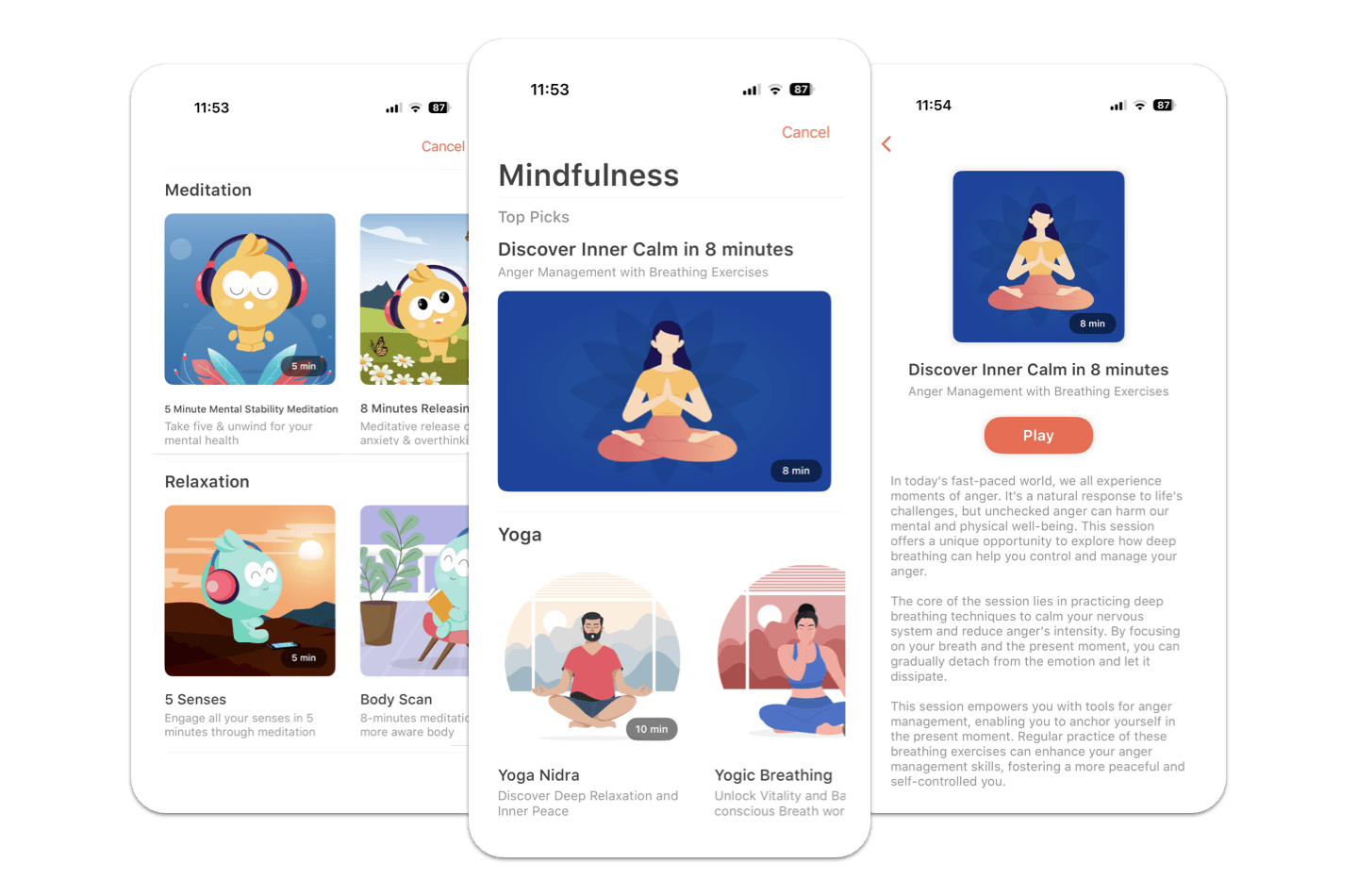
Vantage Fit brings guided meditation sessions for stress relief and focus into the workday, along with daily mood tracking that helps employees stay aware of how they feel over time. Mindfulness minutes can be logged alongside physical activity, creating a simple way to build steady habits.
IBS Software’s 28-day March to Fitness challenge reflects how this approach translates into action. Ninety-five employees engaged with mental wellness programs, while 130 tracked their daily mood, contributing to an overall engagement rate of 88 percent across the organization.
A life sciences consultancy that rolled out Vantage Fit for its teams, found this kind of structured reset made a visible difference during high-pressure phases:
"One of the features I loved the most is the Yoga Nidra session, which helped us relax in the stress-induced environment."
— Celegence
6. Say No and Seek Support
Sometimes, it is important to prioritize your health and decline certain demanding tasks. You must understand that this is not rude or inhuman. It is about tuning into your job-life balance and determining what is best to maintain that balance.
Taking a mental health day off work and taking care of yourself is not going to delay work but rather help you get more productive and get back afresh. Dedicate weekends for self care and take a proper break from work if you need it.
Bottom Line
Avoiding cognitive overload at work is easier said than done. We have different kinds of jobs, and every kind has its own daunting demands. Some tasks pressurize you more than others. But we can always choose to manage things and keep ourselves mentally healthy.
The tips I have mentioned above on managing cognitive overload can help you regardless of your job. Otherwise, it is always prudent to talk to the management if the pressure is getting too much for you.
Frequently Asked Questions
What are the types of cognitive loads?
Cognitive Load Theory defines three types: intrinsic load (the inherent complexity of a task), extrinsic load (unnecessary complexity added by poor presentation or environment), and germane load (mental effort used to build new knowledge and skills). Cognitive overload occurs when the combined demand of all three exceeds working memory capacity.
Are there specific tools or apps that can help manage cognitive overload?
Yes, there are many tools and platforms available to help you overcome cognitive overload. Some of these include Headspace, Vantage Fit, and others.
What is the primary cause of cognitive overload?
The primary cause of cognitive overload is the glitch or an overworked working memory.
How do you reverse cognitive overload?
Cognitive overload can be reversed by following the above-mentioned tips like focusing on one task at a time, selfcare, meditation, etc.
How to recover from cognitive overload?
Taking care of oneself is a good way of overcoming cognitive overload. there are different ways that work for different individuals but being mindful, organizing work, and many other tips can help greatly.