
Stress is one common disease faced by everyone, in today's world. Right from work to our messed up lifestyles, we have managed to provide stress with a forever home in our lives. And that constant and prolonged feeling of stress is what we know as chronic stress.
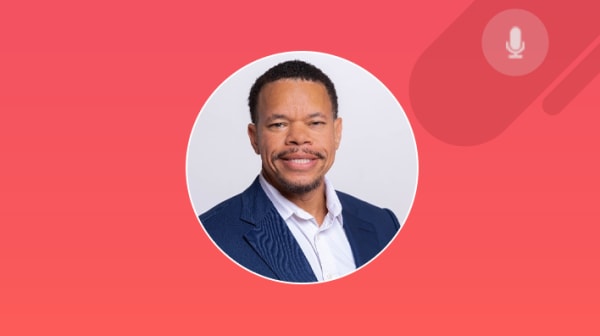
In this podcast, Claudia Grace gives us valuable insights on chronic stress, its meaning and effects. She further explains in detail the ways how corporates can prevent their workforces from developing it.
Key Takeaways
- Chronic stress is the failure of the "off" switch. Claudia's definition: when the automatic nervous system stops activating a relaxation response, the body lives in constant stress. People forget what "not stressed" feels like — and that is what makes it dangerous.
- There are four discrete types, each with its own fix. Time stress (poor planning), anticipatory stress (future events), situational stress (uncontrollable events), encounter stress (difficult people). Knowing which one you're in is half the remedy.
- Burnout is the line between stress and dysfunction. Below that line, techniques help. Above it — heart palpitations that feel like a heart attack, inability to perform duties — the person needs clinical help, not more self-help.
- Post-pandemic, mental-health support rose ~80% in corporates. Claudia cites the Oracle 2021 study showing India, Brazil and UAE hit hardest — employees reported financial struggle, loss of motivation, disconnection. Financial stress alone is linked to depression, anxiety, diabetes and arthritis.
- Voluntary wellness programs fail when employees don't want them. Claudia interviews management and employees separately before designing, because programs that reflect only leadership's vision get ignored.
- Managers weren't equipped for the emotional load. Senior leaders absorbed their teams' distress on top of their own. Health coaches exist partly to give managers a place to offload, so they can keep being supportive without collapsing.
- Ten minutes of relaxation response changes the physiology. Claudia teaches emotional brain training — a short, repeatable way to reset blood pressure and cognition mid-day, so people can make better decisions instead of stress-driven ones.
In Claudia's Words
On what chronic stress really is
Chronic stress occurs when your body experiences stressors with frequency. The automatic nervous system does not activate a relaxation response on a regular basis. Your body is in a constant state of stress affecting every system.
People are in such stress states all the time, it's hard for them to know or feel not stressed — because we're constantly in this stressful state, which is dangerous.
On the four types
Time stress is when you worry about not having enough time. Anticipatory stress is when you worry about a future event. Situational stress is when you're in a difficult situation you may have no control over. Encounter stress is when you stress about interacting with certain people.
Knowing the kinds of stress that can occur helps people better manage their stress — because now you know, "oh, how do I manage my time stress? Is this the major issue for me?"
On the corporate gap
The senior management must be on board to facilitate open communication from the top down, so employees feel comfortable expressing their need for help. Many people are reluctant to say they're not able to manage things.
Even managers felt more stressed because they had to support employees and they had never really had that role. They were carrying some of the employees and they didn't feel equipped to do that.
On what actually works in programs
Programs don't support what the employees want. And you want a successful program where employees want to be a part of it — because they're usually voluntary, not mandatory.
If workflow inefficiencies cause chronic stress, mitigating those is where stress levels naturally drop. The organizational system comes first, not the mindfulness class.
In as little as 10 minutes, you can completely get your body into that relaxation response. Ten minutes can make a world of difference.
About the Speaker
Claudia Grace is a certified Health & Wellness Coach who designs custom Wellness Programs for organizations and private coaching clients. Her holistic approach is founded with a science-based methodology and her vast experience in healthcare industry covering a broad variety of health issues: stress reduction, chronic disease management, nutrition, and mental health support.
Claudia takes a comprehensive approach guiding individuals to become the CEO of their lives, by maximizing their true potential to harness the power of their body, mind, and spirit.
Connect with her on Linkedin.
Recommended Resource: Workplace Stress: A Huge Issue For Companies Worldwide
Show notes
(01:19) : Tell us about journey as a Health and Wellness Coach.
(02:51) : How long have you been working in the area of wellness?
(04:31) : What is chronic stress? What are its symptoms?
(05:38) : Are there any positive aspects of stress?
(10:27) : What are the various types of chronic stress?
(13:59) : Does it have more impact on mental health?
(15:02) : What is the relevance of chronic stress in the corporate world?
(18:08) : Do leaders play a big role in motivating employees to open up about their situation?
(20:12) : What can employers do to figure out if an employee is suffering from it?
(22:59) : What are the top three wellness programs corporates can implement to prevent the workforce from dealing with chronic stress?
(28:05) : Would you like give some suggestions to our listeners?
(33:55) : How will our listeners be able to reach you?