
Want to bring this to your team? Schedule a free Vantage Fit demo to see how mood tracking, guided meditations, and mindfulness minutes work alongside team challenges.
Achieving a good physical health is the most talked-about topic these days. But none of us actually pay attention to our mental wellbeing. But, with the present day work stress and everything going around, emotional wellness needs to come into the priority zone, for leaders and individuals both.
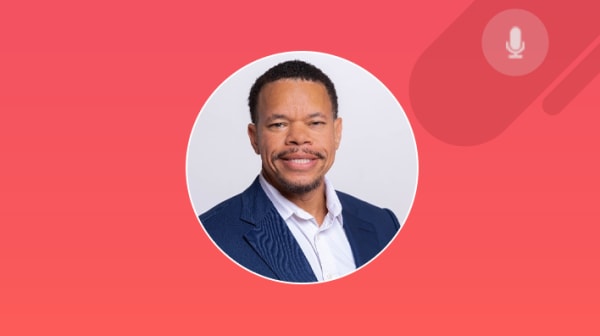
In this podcast, Ben Eden talks about how emotional wellness plays a vital role in the workplace. He explains how leaders need to make sure their employees are doing well, both physically and emotionally. Because at the end of the day, a company's business has a lot to do with employee productivity which would be assured with a stable emotional state.
Key Takeaways
- Suffering in silence is invisible until it isn't. Ben's sister looked like the happiest person he knew until she needed a safety facility — the same pattern he later recognised in himself. On-the-surface success is not evidence of emotional wellness.
- "Leave it at home" is unrealistic management advice. People spend most waking hours at work; asking them to shelve their emotions is like asking them to show up without a family or a life. The result is presenteeism — body in the chair, mind absent — that gets mistaken for a performance problem.
- Emotional wellness has observable characteristics — but you can't diagnose others. You treat others well, like who you are, hold gratitude, value experiences over possessions. Use the list as a self-check, not a judgement of colleagues.
- Anger is usually a secondary emotion hiding sadness, fear, or pain. Ben teaches this as one-line education for leaders — it reframes what's happening in a tense conversation without turning the moment into therapy.
- When leaders hide emotion, employees learn to hide theirs. A CEO who occasionally admits to being tired or stuck earns more loyalty, not less. Ben cites his own experience: vulnerability from the top made him want to work harder for the person.
- Three leader moves: listen, educate, make it safe. Before spending on recognition programs or perks, measure how well managers listen. His call-centre manager would walk in to vent; once the emotion was out, the solution followed — every time.
- The HR-executive frame: emotional wellness is workers' comp for the invisible injuries. We cover physical injuries at work; emotional ones are treated as personal failings. That gap is where absenteeism, turnover, and burnout come from.
In Ben's Words
On the cost of silence
On the surface, she was great, but underneath, she was suffering in silence. I was suffering in silence too. On the surface, picture-perfect life — executive, nice car, nice house, education. Underneath, unresolved emotions and behaviours I hated.
I've seen the joy and the completely different life that comes when we get the help we need, resolve those emotions, and know that we are not broken.
On the workplace gap
If we say "leave it at home" when somebody spends a majority of their waking hours at work — that's not realistic. Even the leader asking them to do that can't do it for themselves.
We have workers' comp for physical injuries. What do we have for emotional injuries or lack of wellness?
When somebody isn't emotionally well, their butt is in the chair but their brain's not there. Then leaders say "this person isn't getting work done, I have to replace them" — and nothing actually gets fixed.
On what leaders should do
I teach it in three ways: you listen, you educate, and you make it safe. Listening is the most effective way to understand what an employee is truly going through. Otherwise, all we do is guess.
A leader's job isn't to tell them what to do. It's to say: here's the task, how can we do it best as a team — then work to remove barriers. Some of those barriers are the lack of emotional wellness.
It sounds counterintuitive, but it's so valuable when a leader shares a vulnerability. If my CEO admits he's tired and doesn't have all the answers, I don't see him as weak. I see someone who really cares — and it makes me work harder.
On the listening lesson from HR
People would come to my office and vent. I learned to see it not as "I need to fix their problems." They were letting their emotions out. Once those were out, they were already smart enough and capable enough to fix the problem themselves.
About the Speaker
Ben Eden has presented around the world with a message that raises listeners’ sights and encourages them to “Reach Their Ultimate Potential”. He has a unique way of communicating with words that will capture your attention and inspire your mindset.
With real-life examples and entertaining stories, Ben helps audiences master their thoughts, heal their emotions, and live their dreams so they can achieve their best in both businesses and in life.
From being an HR executive with nearly 2,000 employees … to starting multiple businesses, Ben helps people live their dreams now as they reach for their ultimate potential.
Connect with him on Linkedin.
Show Notes
(01:32): Please tell us your experience as a Mental Wellness enthusiast.
(07:38): What is Emotional Wellness? Is it the same as Mental Wellness?
(10:12): Can you elaborate on the characteristics of emotional wellness?
(11:00): Can we identify if someone is emotionally well by looking at the traits?
(12:25): Is the term emotional wellness somewhat related to mindfulness and emotional intelligence?
(17:00): How much significance does emotional wellness hold in the workplace?
(21:30): What can the leaders do to ensure their employees are emotionally well?
(25:38): As an HR Executive Coach, have you had any experience with any of your employees who were struggling with mental health?
(29:08) Do you have anything to share with your listeners?