
For HR leaders: Schedule a free Vantage Fit demo to see how the admin dashboard, audience targeting, and engagement analytics support program design end-to-end.
With Covid-19 in the scene or not, the concern for employee health has seen a rapid rise in the recent times. Employers know that employees are the most valuable assets of the organization. As a result, their health makes it to the top most priority list. Because at the end of day, good health leads to productivity.
And remote working being the new normal, there has been a dire need of virtual corporate wellness programs and platforms.
In this podcast, Enzo talks about how employee wellness is a key factor in the corporate world, especially amidst the COVID-19 pandemic. She further talks on transforming the wellbeing scenario through technological advancement and leveraging it to ensure good employee health.
Key Takeaways
- Employee wellbeing was never "the need of the hour" — COVID just dragged it onto center stage. Enzo is emphatic: the cry for humane treatment at work was always there in the shadows. The pandemic stripped away enough distractions that employees started asking out loud, "Am I being valued? Is this work meaningful?" — and the Great Resignation is the answer nobody wanted.
- I/O psychologists audit HR, not just employees. In his framing, his job is to supervise the function that's supposed to be caring for people — running anonymous qualitative and quantitative surveys, partnering with leadership, and designing unlearning programs for toxic leadership habits.
- Bring school-style counselling into the workplace. In the US, every student gets a counsellor and a success coach. Enzo asks why that stops at graduation — companies should embed free counselling, childcare, meditation rooms, and access-to-growth programs into the benefits plan, not treat them as perks.
- The World Bank's "you're not obligated to respond outside work hours" email is the floor, not the ceiling. He flags this as the kind of concrete policy signal that tells employees empathy is real, not branded. Without equivalents, wellness statements are paper.
- Psychological safety is the condition all other programs run on. Employees have to feel safe enough to propose ideas without fearing for their jobs. Everything else — inclusivity across race, gender, religion, hybrid flexibility — fails if this substrate isn't there.
- Companies that kept salaries flat through COVID bought loyalty cheaply. The organisations he watched retain their people didn't cut pay, maintained all staff, went fully remote, and invested in upskilling programs so employees got promoted from within instead of watching outside hires fill the openings above them.
- Flexibility is the "tea and coffee" of post-COVID work. Hybrid is the new normal — not because employees refuse to come in, but because companies that treat physical presence as proof of seriousness are signalling distrust. Following CDC-style expert guidance instead of rushing back to "normal" is the durable move.
- Positive psychology's 10/40/50 split reframes wellness tech. Only 10% of happiness comes from environment (the gadgets, perks, wristbands), 40% from actions taken, and 50% from genetics. Wearables and apps are worth nothing on their own — only the behaviour they drive matters.
In Enzo's Words
On why COVID changed the conversation
COVID brought everyone to a standstill. Employees saw their mental health was at stake. People started to reevaluate the jobs, their leaders, how people treat them — "Is my work meaningful? Is it worth it?" What we found out is employees are humans too. And wherever you find humans, you have human issues. Mental health and wellbeing were always there in the shadows. COVID brought it to the mainstream.
On leadership as the first lever
Look at your leadership. Reevaluate leadership. Run an orientation for leadership. We need leaders who practise empathy and compassion, not authoritarian-style leadership. The World Bank now sends an email telling employees they are not obligated to respond outside work hours. That's a start.
The feedback when we get it right is high productivity. Employees see the change — leaders don't tell them what to do, leaders discuss with them. It's a partnership, it's collaboration, it's healthy communication, it's psychological safety. You can express new ideas without fear of losing your job.
On measuring wellbeing inside organisations
You have to run research — qualitative and quantitative. Surveys, often anonymous, because we want honest, non-biased opinions. We partner with leadership, we measure what's needed, we observe historical surveys versus what's going on now, and then we design programs to help leaders unlearn unhealthy habits and learn new ones based on science-based education.
On what separated retaining companies during COVID
They did not reduce any employee salary during this time. They maintained all employees — shocking for most companies. They allowed everyone to work remote until further notice, regardless of clientele. They checked on employees. There were strong communication and programs for growth.
People wanted to go back to school. Everything's digital now — you can start a side hustle and make better money online than you could working traditionally. Companies that didn't want employees to feel like that was the only option built internal promotion programs instead of hiring outside. Give your employee the education and the training, then give them the position.
On hybrid work and flexibility
Flexibility is basically the tea and coffee of the day in companies right now. Come to work three times a week, do the rest online. Hybrid is not going to stop. It's going to continue. This is normal now.
On wearables and personal responsibility
I don't wear a wrist tracker. I have a sense of awareness I wasn't born with — I learned it. I know every day what's healthy. But if a wrist tracker keeps you balanced, please use one. One man's food is another man's poison. The only unhealthy reason is wearing it to look cool or fit in. Don't leave your life for people's validation.
On happiness and what employees control
According to positive psychology, only 10% of our happiness is based on environment — TVs, wristbands, all the superficial things. 40% comes from the actions we take. 50% is genetics. So the wearables and apps aren't the point — what you do with them is.
Describe yourself to yourself in a very positive way, and work toward it. Seek validation within yourself. Find something inspiring — from your children, from a friend — and work toward your goals. It's never too late.
About the Speaker
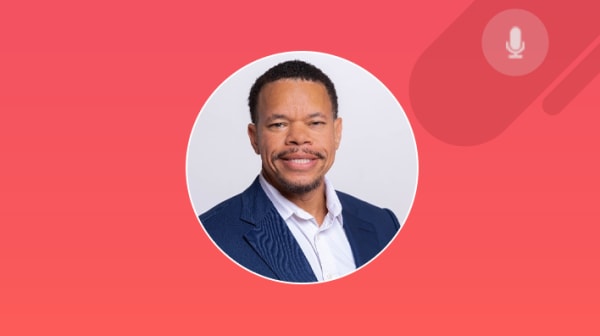
With a background in People Development, Organizational Effectiveness Coaching, and Keynote Speaking, Enzo Ochoga is an Industrial and Organizational Psychologist and a Wellness Nerd. A spiritual needle guides her at all times to make a larger impact, specifically with helping and inspiring people to UNMUTE and TRANSFORM their Mindset by harnessing their POWER within.
Enzo found strength in public service and is now helping professionals.
Connect with her on Linkedin.
Show Notes
(00:56): Tell us about your work.
(02:07): Why Employee Wellbeing is the need of the hour?
(06:15): What role do wellness programs play in organizations and how effective are they?
(10:50): How will employers get the indication that their employees are unhealthy? How will they identify that?
(15:09): How Covid-19 has affected organizations and the health of their employees?
(20:00): State your opinion on the health and safety changes brought about by COVID in workplaces.
(23:01): How is the wellbeing scenario in organizations transforming due to technological advances?
(29:27): Isn't the idea of tracking your fitness activities interesting?
(31:20): What tips would you like to recommend to employers to keep their employees fit and healthy?