
Take wellness deeper: Schedule a free Vantage Fit demo to see how lab report upload, health risk assessments, and biomarker dashboards support preventive workforce health.
The terms health and wellbeing are often interchangeably used. But there exists a difference between the two. Whereas health refers to being in a particular state, wellbeing refers to being in a good or well state. Wellbeing covers all the dimensions of wellness, leading to an overall health status.
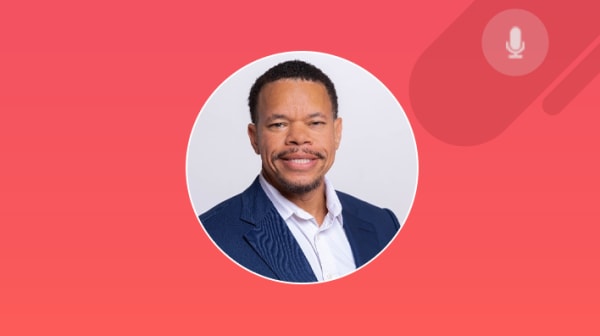
In this podcast session, we discuss this topic of "Health and wellbeing" with Oliver Rolfe. He shares with us his knowledge and experience in the wellness spectrum.
Key Takeaways
- Health is four bodies, not one. Oliver's philosophy, hard-won: physical, mental, emotional, and energetic bodies all have to be managed together. His breakdown is roughly 25/25/25/25 — food, exercise, mind, emotions — and the energetic layer tends to rebalance itself when the other three are looked after.
- His credibility comes from the hard way. 45 surgeries under general anaesthetic between ages 6 and 16. Parents divorced young; brother in rehab; sister with anorexia and bulimia; father had two breakdowns; his own spinal injury progressed to seven damaged discs and ankylosing spondylitis 11 years ago. The holistic view isn't theory — it's what worked when sport-as-identity stopped being available.
- Health is individualistic — "not one size fits all." Gender, region, environment, and diet availability all shape what healthy looks like. A Southern-US red-meat diet is right for that body and region; a Japanese raw-fish-and-rice diet is right for that one. Copying templates across contexts fails.
- Exercise + eating right is the starting point, not the whole. "You could run 10 miles a day and at 45 have a heart attack and die." The lesson: physical health alone isn't holistic health. Mental, emotional, and energetic inputs matter at least as much.
- The gut is your personal pharmacy. Referencing the "gut terrain" theory (Béchamp), Oliver argues the gut manufactures what the rest of the body uses — which is why heavy sugar, white carbs, and spirits degrade physical and mental function together. He eats gluten-free and dairy-free himself.
- The subconscious is the genius; the conscious mind is the noise. Modern hustle keeps us in conscious mode, missing what the body is actually saying. Persistent headaches, stomach discomfort, odd pains — these are subconscious signals worth listening to rather than prescribing against.
- Control + understanding is the work-life balance formula. "Control" means personal cutoffs: knowing when not to answer the phone. "Understanding" means an employer that backs that up — which is why he sees a genuine employer duty-of-care emerging now, not just a branded wellness page.
- Wellness programs need a book-shaped companion. His observation from the field: women are 48% more likely to attend a wellbeing program than men. Group programs alienate a big chunk of the workforce who'd engage privately. Program + take-home material together captures both audiences.
- Prevention beats cure because doctors work after the fact. A doctor cures what's already happened; self-awareness prevents it from happening. Walks, deep breathing, meditation, daily prayer — for Oliver, personal, non-denominational — are the preventive stack.
In Oliver's Words
On why holistic is the whole point
Our health and wellbeing is completely individual. We need to have a greater awareness of our own health and wellbeing, but also look after the whole — the physical, the mental, the energetic, and the emotional bodies.
You can go and run 10 miles a day and at 45, on one of those runs, have a heart attack and die. It depends who you are. It is important to exercise — whatever that means, a run, a gym, a sport, a walk with the dog, being out in nature. But that is a starting point to completeness, not completeness itself.
On the conscious-subconscious gap
We're so active, so forward, so out there, most of the time we're thinking consciously. But it's the subconscious that drives most of our wants and needs and controls our physical, emotional, and energetic bodies. So many people have a headache that hasn't gone in weeks, or a stomach issue, or this pain that won't leave. By listening to yourself and having a closer connection to self, you get understanding — and a guide to help yourself. A doctor cures what's already happened; preventing it from happening is your job.
On gut and nutrition
Your gut and gut health is one of the most important things for your body. Your gut is your pharmaceutical for your own body. Pump it with heavy sugars, white carbs, constant heavy alcohols — you'll harm your gut terrain and therefore your physicality, and you'll feel it.
I'm gluten-free and dairy-free. White carbs make me feel sluggish. Dairy I don't think our bodily tract is meant for. But this is my control of my body — it doesn't mean it's the same for everyone.
Brasilicas — kale, broccoli, cauliflower. Salmon for omega-3 — though be aware of where it's farmed. Avocado, carrots, black and green teas (watch caffeine), ginger, garlic, kiwis, citrus. Vary the diet. Don't go to an extreme on one thing. Even veganism: there's a new study saying by not eating meat you miss key nutrients, especially from red meat. It's balance.
On the regional nature of health
Health is individualistic. In Japan, loads of raw fish, white rice, very little red meat — because there isn't a huge amount of meat there. In Southern US, red meat with most meals, high in potatoes. France is driven toward butters. Italy, saturated fats with oils, fresh tomatoes, fish — or just meat if you're inland. Human beings change to their environments.
On work-life balance at work
The one-word answer is control. The caveat is understanding. Control: personal deadlines, cutoffs, knowing when not to pick up the phone. I've been available 24 hours a day for 20-odd years — but I take the break when I need it, even just a half-hour walk in the sun.
Every employer has a duty of care to their employees. We are entering a new age where that has to become real, not branded.
On workplace wellness programs
Women are 48% more likely to go to a wellbeing program than a man. It's not that women need more help — it's that men feel uncomfortable in group settings. There are employees who'll engage with a take-home guide they can read privately, who'd never sit in a group. You need both. Health and wellbeing at the employee's location can be tricky — they're never 100% relaxed at work.
There's a reticence: "If I go to this program, will I be seen as less productive? Could this cost me my job?" So the balance between programs and take-home material matters.
About the Speaker
Health is not one size fits all. It's individualistic. - Oliver Rolfe
Oliver Rolfe is the Founder & CEO of Spartan International and focuses on Life & Career Guidance and Global Equities & Investment Banking recruitment. He studied Accounting and Finance and started his career within a leading global accounting firm. Oliver then sought a new challenge and moved into the executive search arena in 2003.
In 2019 Oliver published his first book ‘The Survivor’s Guide To Your Career Today’ which is the must-have career guide, and his second book “The Holistic Guide To Your Health & Wellbeing Today” was released in November 2022 and reached the top 50 bestselling books on Amazon.
Oliver has also been published in the New York Times, Bloomberg, The Trade News, EuroMoney, The Gulf Times and many other global publications. Oliver & Spartan have a daily blog that receives 100,000's of individuals views a month, a newsletter with 1,000's subscribers, over 21,000 social media followers and a Spartan YouTube Channel.
His mission has always been; to assist people in becoming the best they can achieve to be.
Connect with him on Linkedin
Show Notes
When it comes to health and wellbeing, you must look at the whole, categorically and not just one area. - Oliver Rolfe
(00:34) Tell us about your journey in the area of wellness.
(04:02) What inspired you to write the book "The Holistic Guide to your Health and Wellbeing Today"? Can you tell us more about it?
(12:29) Is exercising and healthy eating enough to maintain good health?
(17:50) Is 50 percent diet and 50 percent exercise all we need to be healthy?
(20:51) Can you debunk some of the myths surrounding health and wellbeing?
(24:31) How can we balance work and personal life to maintain good health and wellbeing?
(26:52) How can employers and employees benefit from these wellness programs?
(29:53) Would you like to share some valuable suggestions with our listeners?