
Bring movement to your workday: Schedule a free Vantage Fit demo to see how step challenges, 30+ activity types, and the 7-minute workout fit into a full wellness program.
The impact of fitness on your bank account is an interesting and multifaceted concept that connects physical health to financial well-being. By staying healthy, you can lower your medical expenses, insurance premiums, and out-of-pocket healthcare costs. Investing in fitness through regular check-ups and preventive measures can help identify health issues early, reducing the cost of treating advanced or chronic conditions.
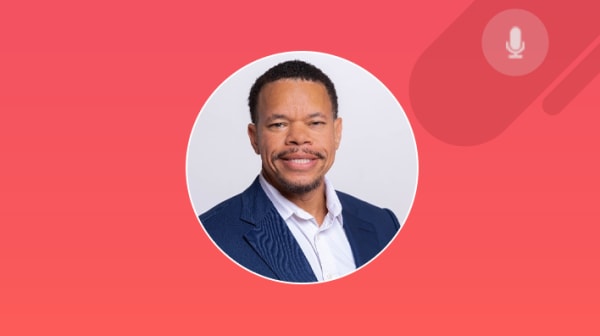
In this podcast, Ritchie Nkana talks about how staying healthy ensures financial wellness.
Key Takeaways
- Your "bank account" is plural. Ritchie reframes the idea beyond money — there's a financial account, a productivity account, an energy account, and a fulfillment account. Fitness compounds all four, and framing it that way reopens the case for busy professionals who say they can't afford it.
- Delayed pain vs. delayed gain is the real cost framework. Highly processed food and sedentary comfort feel good now and collect in chronic disease later; salads, pushups, and saving feel uncomfortable now and compound into health and wealth. The delayed pain, he argues, dwarfs the initial gratification.
- Exercise delivers a 20% productivity premium. Ritchie leans on this repeatedly as the answer to "I don't have time to work out because I need to put food on the table" — the workout is what helps you put more food on the table.
- BDNF rises threefold with exercise. The brain-derived neurotrophic factor that drives neurogenesis is enhanced as much as 3x through physical activity — making fitness a cognitive-function intervention, not just a physique intervention.
- The Leeds Metropolitan study is the corporate case. In a 200-worker study, employees who went to the gym on a given day showed measurably improved patience, time management, and focus versus non-gym days — a clean productivity signal HR teams can use to defend wellness-program budgets.
- Accountability is worth 95%. Studies show accountable individuals have a 95% chance of hitting a goal — the real reason coaches and corporate challenges work is not the workout knowledge, it's the external scaffolding around consistency.
- Money is a cop-out in the YouTube era. Gym memberships aren't the bottleneck; disorganized free knowledge is. A coach's job is to hand you the right key, not to teach pushups.
In Ritchie's Words
On fitness as a multi-account investment
When we talk about our bank account, it goes way beyond the financial. There's our productivity bank account — studies are very clear, when we exercise we're 20% more productive. There's our energy bank account, our fulfillment bank account. This is the only home we have — our bodies.
Life is about two delays. There's delayed pain and there's delayed gain. Stuff that feels good in the moment gives you that early kick of instant gratification, but the delayed pain later so much far outweighs it.
On the workplace productivity case
When busy people tell me they don't have time to exercise because they need to put food on the table, exercise is exactly what will help them put more food on the table. We get paid based on the value we bring to the marketplace — and exercise enhances cognitive function, serotonin, dopamine, focus, energy.
There was a study at Leeds Metropolitan on about 200 workers. On the days the group went to the gym, three things were enhanced — their patience, their time management, and their focus — compared to a group that didn't go to the gym that day.
On accountability as the real product
Studies have shown that people who are accountable to somebody have a 95% chance of achieving the goal. That's huge. That's the reason people pay a coach — not to learn a pushup, but because accountability raises your odds to 95%.
Motivation is one thing. Consistency is another. Consistency comes with accountability.
On why "I can't afford it" doesn't hold
We live in a YouTube world. There's plenty out there, plenty of free apps, plenty of knowledge. Money should not be an excuse. What a coach gives you isn't the workout — it's the key that opens the right door in a prison of disorganized knowledge.
About the Speaker
Ritchie is an award-winning author, Chartered Accountant, and Transformational Specialist. He's also a certified Personal Trainer, Metabolic Conditioning Coach, Sports Therapist, Pain-Free Performance Specialist, and Sports Nutritionist.
For over a decade, he led transformation initiatives in the banking industry. In the last few years, he launched his own coaching business, leveraging his expertise in both physical and financial fitness. Ritchie is dedicated to transforming busy individuals into peak performers through fitness.
Connect with him on LinkedIn,
Show Notes
01:30 Would you introduce yourself to our listeners and tell us about your wellness journey?
03:11 What are the financial benefits of maintaining a healthy and active lifestyle?
08:37 Can you explain the correlation between fitness and increased work productivity and income potential?
13:03 What are some cost-effective ways to stay fit and maintain a healthy diet without breaking the bank?
20:44 Are there studies or statistics that demonstrate the financial advantages of investing in fitness and wellness programs for businesses and employees?
23:22 Would you like to share any valuable suggestions with our listeners?