
Want to bring this to your team? Schedule a free Vantage Fit demo to see how mood tracking, guided meditations, and mindfulness minutes work alongside team challenges.
Success in the knowledge economy comes to those who know themselves - their strengths, their values, and how they best perform. ― Peter F. Drucker, Managing Oneself
In the hustle and bustle of today, we often lose out on one thing while looking for another. It gets difficult to manage everything at once. Sometimes, we even overlook our wellbeing while focusing on achieving deadlines. As long as we do not have an in-depth understanding about our own self, we will always face such difficulties.
Knowing ourselves, our values, identifying our strengths and weaknesses, and taking responsibility for our growth, personally and professionally, are the first few steps towards managing ourselves. Once we know these, we can address the lags and work on the issues.
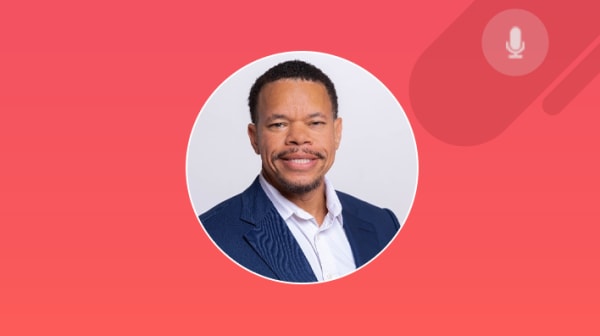
In this podcast, Dr. Bhaskar Bora discusses the significance of managing oneself and prioritizing one's health.
Key Takeaways
- Managing oneself is the prerequisite to managing anyone else. Bora's working definition of management is coming up with solutions — and you can't do that for a team while your own discipline, ethics, and attitude are unregulated.
- Focus energy only on what you can change. He draws a line between earthquakes (uncontrollable) and your attitude and planning (controllable). Spending mental bandwidth on the former drives depression, frustration, and lost productivity.
- "Who holds the monkey?" is the corporate discipline he wants managers to learn. Citing the classic Harvard Business Review piece, Bora warns that taking on every direct report's problem means five or six "monkeys" on your back and your own work suffering. Help, then hand the monkey back.
- Be proactive, not reactive — especially with email. Answering email the instant it lands generates more email and more stress. Setting a response window (and refusing to check mail during meetings) is the self-discipline senior people skip at their peril.
- Compartmentalise the brain by context. When Bora was a practising GP, the restaurant existed only when he was at the restaurant; family existed only at home. Blurring those contexts is what makes always-on senior roles burn out.
- Delegation fails because of control and ego, not competence. Leaders hesitate to train juniors partly because they fear being replaced. Bora frames delegation as climbing the ladder — your job now is the next rung, so let someone else grow into yours.
- Spirituality at work is ethics plus perspective, not saffron robes. His stone-breakers parable — same job, three perspectives (misery, survival, contribution to a community hospital) — is his answer for employees stuck in roles they didn't pick: "love what you get to do."
In Dr. Bora's Words
On self-management as a leadership skill
Management means coming up with solutions. In order to manage others, it is quite important that we manage ourselves first — with certain disciplines, certain ethics, a certain attitude towards life and work that not only optimises our productivity but helps grow others along with us.
Focus your energy on the things that can be changed with a positive difference, not on negative things you cannot control. Otherwise it only leads to reduced productivity and mental health issues — depression, frustration.
On the corporate employee's hardest lessons
Consider every problem as a monkey. If a colleague comes to you with their problem and you take it on, you've taken that monkey from their back onto yours. Help the monkey — then give it back to the person who gave it to you. Otherwise you end up with five or six, and your own monkey suffers.
We tend to check emails first thing in the morning and reply and think later. The more you reply, the more emails come. Set standards — most emails can wait a couple of hours. If it's urgent, ask them to call. When I'm in a meeting, I focus on the meeting.
Many people can't delegate for two reasons — control and ego. They fear the subordinate will take their place. But I have climbed that bit of the ladder; my time is to go to the next bit of leadership. Let the subordinate grow. It's a win-win for the whole company.
On physical and mental health as one system
Only if you have good physical health can you have good mental health. If you're tired, in pain, not well in yourself — it leads to irritation, chronic pain, depression, frustration, and reduced productivity.
It's not always about hours of sleep — it's about quality of sleep. If muscles or brain tire, lactic acid builds up, and productivity drops. Give the brain a bit of rest.
If you bottle up mental health issues, it gets worse. Talk to a trusted person, a line manager, a friend, a counsellor online or by phone. If you can't talk to anyone, write it down — dictate into a phone and erase it later. Just giving words to the feelings helps.
On perspective and meaning at work
Three men were breaking stones. One was moaning. The second said, "at least it's feeding my family." The third said, "these stones are going to become a community hospital that will treat our village." Same job, different perspective. It's not about getting to do what you love — it's about loving what you get to do.
When a storm comes, an eagle flies higher to rise above the turbulence; a mouse hides in a corner. We all have our own storms. The choice is whether to become the eagle or the mouse.
About the Speaker
When storms come, an eagle flies higher in order to rise above the turbulence while a mouse hides in a corner. I had to become that eagle and soar higher, not be cornered, and crushed in the storm of life.
Believing in myself was the only way. ― Bhaskar Bora, The Second Chance in Life
Having qualified as a doctor in 1999 from Guwahati Medical College and working in Delhi, Dr. Bhaskar Bora immigrated to the UK in 2004. Emboldened by the struggles of any immigrant, he completed his post-graduate training and joined as a partner in a clinic in Kent, where his journey as an entrepreneur started.
In 2019, he suffered from a severe spinal cord injury due to an operation that left him with paralysis of both legs, a less functioning right hand, and a 7 month's stay in the hospital, eventually leading to a forced medical retirement from his medical practice.
His family was young, so he could not afford to hang up his boots. So he had to re-learn walking (limited distance with crutches), writing, and many other daily routines, but most importantly, he had to retrain his mind to accept the new normal.
Bhaskar Bora is now a successful author, motivational speaker, painter, and entrepreneur.
Connect with him on LinkedIn
Show Notes
(02:04) What does a typical day look like to you?
(05:10) Why is it important to manage oneself?
(08:06) How can people manage physical and mental health?
(15:11) How can a corporate employee maintain physical and mental health while managing work life too?
(25:58) What is your take on spiritual wellness?
(32:18) Would you like to tell us about your book "The Second Chance at Life"?