
Want to bring this to your team? Schedule a free Vantage Fit demo to see how mood tracking, guided meditations, and mindfulness minutes work alongside team challenges.
The role of leadership and management is hard to play, and managing a team is not as easy as it seems. It comes with an equal set of challenges. Now, amid all obstacles, no one talks about the challenge of maintaining stable mental health, and workplace stress is the leading contributor to that.
Also, along with taking care of one's mental status, employers need to look after their employees' mental wellbeing. And in the current world, there has been a welcome focus on mental health.
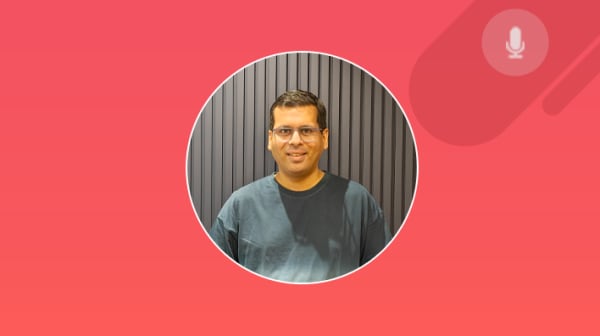
In this podcast, Swagata Bapat talks about how mental health deserves the top priority and how to cope with the challenges that come our way effectively.
Key Takeaways
- Leaders can't support team mental health if they haven't prioritized their own. Swagata's coaching consistently surfaces the same blocker: leaders naturally drawn to serve others default to self-neglect. Boundaries on time and availability are the precondition, not the reward.
- COVID didn't just raise awareness — it reshaped the leadership job. Managing ongoing uncertainty, hybrid transitions, global teams under conflicting government mandates, and frontline workers all at once has pushed mental health from an HR topic to a core leadership competency.
- EAP is necessary but downstream. Swagata pushes back on counseling-as-strategy: organizations should build a psychologically safe workplace before staff hit the point of needing clinical support. EAP should be a floor, not the whole program.
- Get out of your head and into your body. One of her top four prescriptions for leaders is explicitly physical — movement, breathing, grounding, breaks from the screen. She runs a live 3-breath exercise on-mic to prove how fast a reset works.
- Help-seeking is about vulnerability, not personality. The research she cites shows introverts ask for help too; what determines help-seeking is whether someone believes it's acceptable to be vulnerable. That's a culture lever leaders can pull.
- Run a "Start, Stop, Continue" audit. Her takeaway exercise for every employee: three things to start (that energize), one to stop (that depletes), and what's already working. Small, personal, repeatable — and a ready-made wellness-program prompt.
- Watch for meaningful vs. tokenistic programs. Workforces can smell a tick-box mental-health initiative. Swagata warns that poorly-designed wellbeing activity actively erodes trust in leadership.
In Swagata's Words
On what leaders are actually struggling with
Leaders have had to take up and absorb information really quickly, change their approach and communication, support staff working remotely, and make decisions in the context of new risks with not always perfect information in front of them. While doing all of that, they still have to drive outcomes.
Many leaders talk about not having enough time. A lot of our coaching is around how to stop and take time for reflection and self-care, and how to set and keep boundaries — that really tricky balance for people who are naturally driven to serve and look after others.
On building a mentally healthy workplace, not just counseling
EAP services are incredibly important. But stepping closer to when people aren't at that point of needing counseling, there's a lot leaders can do to ensure they've got a mentally healthy workplace before it gets to that point — psychological safety, prioritizing wellbeing, modeling it in leadership.
The challenge for leaders is finding the right balance between managing performance and ensuring staff are supported — and putting meaningful strategies in place, not things that can be received as tokenistic or a tick-box exercise.
On the four-part prescription for leaders
Understand yourself better. Every leader's story is different — what keeps you grounded, what brings you joy, what de-energizes you, what beliefs do you carry into setbacks?
Leaders get very consumed in their head — constantly thinking, processing, making decisions, sitting in front of a computer. Get out of your head and into your body. Movement every day, mindfulness, breathing, grounding, regular breaks from your desk.
Be kind and compassionate to yourself. An overriding theme I see is perfectionism — being harsh and critical about how well you're doing things. How do you hold your own hand?
On help-seeking and workplace connection
Help-seeking isn't really a function of introversion or extroversion. It's whether you have a view that you need to manage this on your own, or whether you think it's okay to be vulnerable and reach out for help. Workplaces and teams have such an important role in noticing changes in behavior — someone becoming a bit more withdrawn.
About the Speaker
Swagata is an executive coach and facilitator with over 30 years of experience in the mental health and wellbeing space.
She has worked with leading mental health and wellbeing organizations in Australia, including headspace national youth mental health foundation and orygen, the national center for excellence in youth mental health; peak bodies such as Mental Health Australia, and has provided consultation to State and Federal Governments across her career.
Swagata is an accredited coach with the Institute of Executive Coaching and Leadership (IECL) and an accredited practitioner in the Human Synergistics Lifestyles Inventory tool (LSI).
Her work is focused on 𝙪𝙣𝙡𝙤𝙘𝙠𝙞𝙣𝙜 𝙥𝙤𝙩𝙚𝙣𝙩𝙞𝙖𝙡 in individual leaders, and leadership teams and her customized programs offer
• 1:1 executive leadership coaching
• Group leadership programs and Team Building
• Leadership Style Inventory (LSI) debriefs and coaching
Connect with her on Linkedin.
Show Notes
(01:21) Tell us about your journey in the area of mental health.
(02:38) How much importance do people in general give to mental health!?
(04:10) With the pandemic in scene, do you think mental well-being has gained prominence due to that!?
(06:16) What are the challenges leaders face while ensuring mental well-being for them and of their employees!?
(11:54) Do you think corporates in today's world know the significance of mental wellness!?
(13:48) What are the initiatives leaders can take to support their workforce struggling with mental health!?
(17:51) Do you think mindfulness and emotional intelligence has a lot to do with mental health?
(22:49) Would you like to share some suggestions with our listeners?