
Want to bring this to your team? Schedule a free Vantage Fit demo to see how mood tracking, guided meditations, and mindfulness minutes work alongside team challenges.
Mental Wellness is one of the most talked-about topics in today's world. Our mental health deserves the same attention as our physical health. Infact, both are correlated. Poor mental health leads people to depression, anxiety, and whatnot.
With this, one other thing has seen a rapid rise in recent years- Suicide. In most cases, depression is what ends in suicide. Sometimes, when people struggle with mental health issues and are going through a lot of difficulty coping with them, they find suicide as the only way out. This is heartbreaking.
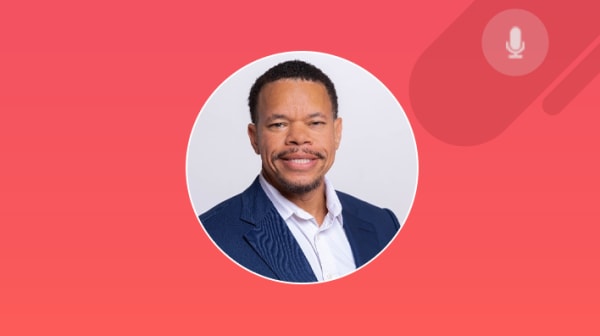
In this podcast, Steve Phillips explains how mental health plays a significant role in our lives. He further talks about his journey as mental well-being and suicide prevention enthusiast.
Key Takeaways
- Most suicides are preventable — but never traced to a single cause. Steve draws on Professor Rory O'Connor's research to name the two recurring signals: a sense of entrapment (financial, relational, career, health) that curdles into hopelessness. It's an accumulation, not an instant decision.
- The workplace hides suicidal distress in plain sight. 46% of people who die by suicide were struggling with a diagnosable mental health condition, yet colleagues routinely report "they seemed absolutely fine." Building mental-health literacy into managers is not optional.
- Remote work lengthened the workday by 28 hours per week. Steve cites the UK Mental Health Foundation figure — an average 28 extra hours each week during the first lockdown — as evidence that work-from-home quietly industrialized burnout.
- One-size-fits-all wellbeing policies are insufficient. His analogy: we're all in the same ocean, but different boats. Leaders have to open individual conversations about what psychological safety looks like per employee, not roll out a blanket programme.
- Wellbeing ROI is real — 5x per pound. Steve references Deloitte's UK/global studies: for every GBP 1 invested correctly in employee wellbeing, companies recoup around GBP 5. The business case is settled; the execution isn't.
- CEOs, not HR, must own this. He's firm that dumping mental health on the HR department is too much pressure and signals it's a side-project. Culture change has to be led from the top.
- Listen, don't fix. Steve's core lesson from running The Jordan Legacy: people considering suicide don't usually want to die — they want the pain to stop. The single highest-leverage skill any colleague, manager, or family member can build is real listening, not problem-solving.
In Steve's Words
On what actually leads to suicide
There is never one issue that leads somebody to take suicide as an option. It can be a number of things that have built up over a period of years that give that person a sense of hopelessness.
The two things that repeatedly come out are a sense of hopelessness and a sense of entrapment — trapped financially, in a relationship, in a career, with a physical illness. That sense of being trapped leads to hopelessness because they can't see any way out.
People tend to hide their feelings really very well. People think suicide is sudden and spur-of-the-moment. Very rarely — most suicides are planned or considered well in advance.
On the workplace mental-health gap
In the first lockdown in the UK, people working from home were working an average of 28 hours longer each week. That was from the Mental Health Foundation study.
It's not enough for a company to say "we've got this wellbeing policy, here it is" — one size fits all. Everybody has experienced the last two years in a very different way. We're all in the same ocean, but we're in different boats.
It's important that leaders of the business, from the CEO at the top, take responsibility for this. If it's only driven by human resources, that's not enough. That's a lot of pressure to put on an HR department.
On the business case
The evidence is massive. Deloitte have published big studies in the UK and globally. For every one pound spent on employee wellbeing, where companies do it correctly, they usually see a five-pound return. The numbers financially stack up.
On the culture of men and silence
75% of all suicides are male. More women attempt suicide and suffer depression, but more men die by it. As a man, the cultural belief across generations is you're the provider, you show strength at all times, and any weakness is not a good thing.
On listening
When people consider taking their own lives, most times they don't want to die — they simply want a solution to the pain they're feeling. One of the ways we help is by listening properly, not trying to fix them.
We often say people are listening with the intent to reply. We all need to become better listeners. That would be my message.
About the Speaker
For almost 30 years, Steve Phillip was a successful consultant, trainer, and keynote speaker when he received a call on December 4th, 2019, that changed his world forever – his son Jordan had taken his own life.
With a LinkedIn following of more than 36,000 people, Steve's articles and posts have engaged a global audience of millions. Early in 2020, he established The Jordan Legacy CIC to support those struggling to cope with life or considering suicide.
Steve has delivered talks on suicide prevention to corporate organizations and communities throughout the UK and Europe. He has also been invited to speak to leaders, employees, and policymakers within the following Government departments: Cabinet Office, Department for Health & Social Care, Crown Commercial Service, Home Office, the Ministry of Defence, the RAF, and North Yorkshire Police.
Steve's lived experience of suicide, combined with his reputation as a highly engaging speaker, will help you understand how to better look after your own mental health and how you can support others.
Connect with him on Linkedin.
Show Notes
(01:37) Can you tell us about your journey as a successful trainer and consultant in the field of mental health?
(03:18) How much prominence has mental health gained in today's world?
(04:15) Do you think social isolation and loneliness due to COVID and lockdown have led to the increase in rising mental health issues in people?
(06:03) Do you think opening up to someone while dealing with mental health issues helps the individual?
(09:02) As per statistics, men have a comparatively higher suicide rate than women. So, do you think the reason behind this is men's inability to express emotions that often? Also, because of the stigma attached to the fact that men cannot cry or pretend to be rough and tough at all times?
(11:42) In our society, a mentally unwell person is called mad. What do you have to say about that?
(13:19) How do you think you can prevent a suicide from happening?
(16:15) Do you agree that suicide does not happen all of a sudden, and it is more like piling up emotions?
(17:17) Amidst busy schedules and deadlines in the corporate world today, do you think mental health is often neglected?
(20:36) As a consultant, have you ever come across individuals struggling with workplace stress and developing feelings of anxiety?
(21:51) Do you think failing to maintain a work-life balance can develop people's mental health issues and anxiety?
(23:25) Do you think Employee Burnout has seen a rapid rate since the pandemic?
(24:18) Don't you think total work from home can have a negative impact on the employees?
(25:42) Did you ever find anyone thing in common among your clients?
(27:40) What do you think leaders can do to efficiently help employees struggling with mental health?
(30:49) Do you think communication is the key when dealing with someone going through a tough phase?
(31:11) Would you like to share more about your journey and how has it been in the area of mental health?
(38:00) Would you like to share something with our listeners?
(39:55) How would our listeners be able to reach you?