
Want to bring this to your team? Schedule a free Vantage Fit demo to see how mood tracking, guided meditations, and mindfulness minutes work alongside team challenges.
COVID-19 has made people conscious of their health and wellness. Especially it is seen that the post-pandemic corporate industry is more focused on achieving holistic goals and mental wellbeing for its employees. Mental wellbeing has seen a rise in priority, considering how lockdowns have taken a huge toll on people's mental health.
In this podcast, Namrata Jain talks about the various mental wellness trends in the current world and how businesses are implementing them to support their workforce as they march towards with the hope of a Covid-less future.
Key Takeaways
- EAP usage has jumped 4x since COVID. Namrata's pre-pandemic data showed just 4–5% of employees actually using counseling benefits; post-COVID that figure has climbed to 20–25%. The stigma is breaking — but only because the crisis made it impossible to hide.
- The shift must move from curative to preventive. She argues 2022's real mental-wellness trend isn't more counselors — it's building the precautionary habits (retreats, me-time, self-reflection) that prevent the anxiety spiral before treatment is needed.
- Phone-free bookends reset subconscious programming. Namrata's simplest prescription: no phone for 30 minutes after waking and 30 minutes before sleeping. She frames those windows as the moments the subconscious absorbs most deeply, so social-media comparison becomes self-doubt by default.
- Group workshops create awareness; one-on-ones create change. Her corporate model deliberately pairs both. Workshops open the conversation; private counseling — with confidentiality strong enough that the employer doesn't know who attended — is where actual unlearning happens.
- Cultural stigma makes delivery design matter. She moved her clinic off a main road because Indian clients still prefer discreet access. Corporate wellness programs ignore that reality at their peril: offering counseling is not the same as designing it to be used.
- Leaders set the culture — or don't. Her corporate-wellness thesis: employees treat leaders as role models the way children treat parents. If the CEO doesn't talk about mental health, a mid-level manager won't either, and the programs become window dressing.
- Short work hours, higher productivity. She contrasts Indian 8–12 hour workdays with six-hour norms elsewhere where productivity is higher — and credits the gap to workplaces that value people over sales volume. "Invest in your people for people to invest in your organization."
In Namrata's Words
On the COVID-driven shift in help-seeking
Pre-COVID, organizations came to us with 4–5% usage of mental health facilities. From the time COVID struck, it started increasing so much that today we have 20–25% of employee strength seeking help. People knew they should, but they were shy. COVID made it so evident.
In the last two or three months, I've had clients who had an amazing life before — and the stress they took on personally and professionally through the pandemic has turned into major illnesses. Our body is a space where mental health, if it's on the downline, manifests eventually.
On preventive-first wellness
The trend should move towards precautionary measures and not curative measures only. Curative is needed for people who are already suffering. But if you've been able to handle your stress levels, it's time for you to get into a precautionary lifestyle.
A very simple exercise — don't use your phone for 30 minutes after you wake up and 30 minutes before you sleep. That's when your subconscious is most active, and social media brings in comparison, conflict, low self-esteem. This one ritual can make a big difference.
On program design for corporates
Group programs are brilliant — workshops, webinars. But at that level, you just become aware. What do you do after that? One-on-one counseling or coaching is very important. In India, there's still stigma. People prefer talking about it in private than in front of a group.
Our organizations provide a service where employees can come to the clinic and the employer has no idea who is coming in. Confidentiality is key. People want to keep it private, and that's fine — we respect that.
On leaders and culture
It's the leaders who need to step up. If the leaders talk about it, the organization talks about it. Nike has rooms for meditation. Google has sleeping pods. Certain organizations have sports within the premises. Organizations must create the culture, and leaders must initiate it.
In India we work 8 to 12 hours. In other countries people work 6 hours with higher productivity. When people are given more importance than just the sales they do, productivity automatically comes in. Invest in your people for people to invest in your organization.
About the Speaker
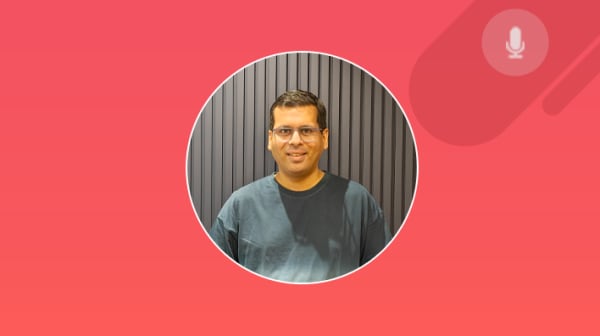
Namrata Jain is a TEDx Speaker, Psychologist, Corporate Trainer, and Life Coach with expertise in understanding the human mind-body and spirit through which she guides her clients to live a more balanced, healthy, and spiritual lifestyle. She caters to clients with depression, anxiety, relationship issues, addiction, and work-life stress.
Namrata has evolved an innovative approach towards in-classroom training at Corporate and Educational Institutions. Her focus is new age and more on Experiential Learning as it allows every individual" to be," thus making learning; a process of growth rather than a lecture platform.
Connect with her on Linkedin.
Show Notes
(01:27) Tell us about your journey as a mental health professional.
(03:01) Have you noticed any difference between adults and children regarding their mental wellness?
(04:29) How much prominence does mental health have in today's world?
(09:31) Are physical health and mental health co-related?
(11:36) What are the mental health trends you can try in 2022?
(16:36) One-to-one counseling often helps introverts to speak up. What is your opinion on that?
(19:25) How can employers encourage these mental health trends in their organizations?
(24:01) Would you like to share your thoughts with our listeners?
(26:54) How will our listeners be able to reach you?