
Want to bring this to your team? Schedule a free Vantage Fit demo to see how mood tracking, guided meditations, and mindfulness minutes work alongside team challenges.
Psychological safety is believing that you can openly express your ideas without being ashamed, embarrassed, or rejected. Speaking up with thoughts and ideas, particularly in the workplace where your teammates surround you, can sometimes be challenging.
And if an employee is not comfortable sharing their opinions, some great initiatives might not even see the light of the day. Effective plans would not come to the surface and be concealed forever, which can often lead to business repercussions.
According to a 2017 Gallup poll, 3 out of 10 employees strongly agreed that their opinions are ignored at work.
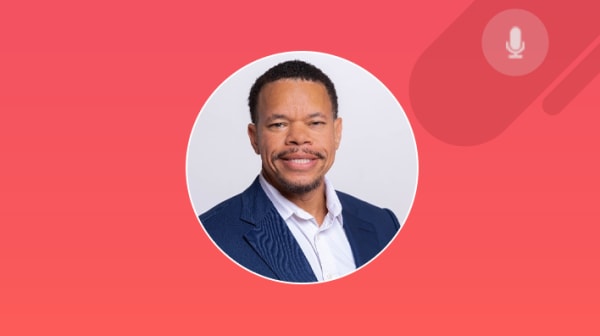
In this podcast, Ruthann Weeks shares strong insights about the role of psychological safety in the workplace. She explains how a psychologically safe workplace would benefit both employers and employees.
Key Takeaways
- Psychological safety is trust to take interpersonal risk. Ruthann defines it as the freedom to express ideas, make mistakes, and report near-misses without fear of reprisal, blame, or shame — the point is learning and efficiency, not comfort.
- The 13 psychosocial factors are the operating standard. She anchors the conversation in the Mental Health Commission of Canada's 2012 international standard: civility and respect, clear leadership, right-person-right-role, psychological support for personal and work-driven struggle. Not theory — an assessable framework.
- The Great Resignation is a psychological-safety referendum. Ruthann cites studies showing up to 79% of workers are considering or actively seeking new roles. With millennials set to hit 75% of the global workforce by 2025, she argues the cohort will not tolerate a toxic status quo — safe workplaces now hold a hiring advantage.
- Diversity without inclusion safety is wasted hiring. You can build an ethnically, generationally, and gender-diverse team, but if eye-rolls and interruptions signal whose voice counts, the quiet voices — often the ones with the unexpected solution — never surface.
- Failing forward beats failing repeatedly. She sees organizations address incident after incident — bullying, harassment — without ever addressing the underlying pattern. Psychological safety is the mechanism for naming and fixing root causes.
- Culture change is top-down or it is fragile. Team-level pockets of safety exist, but without C-suite buy-in they collapse when one person leaves or joins. Ruthann's advice to business leaders: properly resource HR, give them capacity and outside help, treat people and culture as the priority they are.
- Leaders are burned out too — model self-kindness. Ruthann is explicit that HR and leadership sit among the most stressed roles in the pandemic. "Do what you can from where you are with what you have." Sometimes people don't need to be fixed; they need to be heard.
In Ruthann's Words
On what psychological safety actually is
Psychological safety is a level of trust in an organization to take interpersonal risk — to express thoughts, opinions, ideas, to make mistakes and near misses and report them without any fear of reprisal or blame, for the simple purpose of learning, growing, and improving efficiencies.
It's really allowing people to bring their whole selves to work, to participate fully and engage with the business's strategic objectives while feeding our human need for belonging and meaningful work.
On the workforce shift
Up to seventy-nine percent of workers are really considering leaving or actively looking for other roles that support them better. Millennials will make up seventy-five percent of the global workforce by 2025, and they are much less likely to put up with a toxic status quo.
Organizations that get psychological safety right have a definite competitive advantage.
On diversity and inclusion
If you've built a diverse team but you don't have inclusion safety, you don't give people freedom to participate fully and express their thoughts, opinions and ideas freely — without any eye rolling, without people speaking over them in meetings — you haven't built a diverse team. That next great solution might come from the least expected source.
On leadership and root-cause thinking
Organizations keep addressing the incidents without addressing the underlying issues, just repeating the same patterns over and over. It's so costly.
How we do anything is how we do everything. If you're treating your customers very intentionally well but not treating your employees well, your customers will feel it.
Cultural change starts in the C-suite. You can't create any cultural change without buy-in from the top. Resource your human resource department — give them the capacity, bring in outside help, because people and culture really is the most important thing in your organization.
On the ripple effect
When people are engaged, fulfilled, happy, and productive at work, there's a ripple effect. They go home and they're kind to their family. They're more patient in the commute. They extend goodwill to their neighbours. Employers have an obligation that has a bigger effect on society in general.
Do what you can from where you are with what you have. Leaders are burned out too. Be kind to yourself first, be kind to each other. Sometimes people just want to be heard.
About the Speaker
As a speaker, author, trainer, consultant and connector, Ruthann specializes in workplace psychological safety and corporate social well being; mental health; violence and harassment prevention related to bullying, sexual harassment, sexual violence, and domestic violence as it affects the workplace.
Embracing Corporate Social Innovation, Ruthann works with Enlightened Leaders to build harmonious workplace cultures where individuals are free to be authentic and vulnerable in taking interpersonal risk. Such an environment creates continuous improvements and efficiencies. Innovation reigns and high engagement, increased productivity and profits result.
As a public speaker Ruthann is engaging, captivating and inspiring. Her lived experience, coupled with her client work in human service roles and training and education gives her a multi-faceted understanding and approach to workplace wellness that is rich and transforming.
Connect with her on Linkedin.
Show Notes
(00:49) Tell us how do you work.
(01:33) How would you describe psychological safety?
(03:31) Don't you think psychological safety plays an important role in organizations?
(05:36) Can psychological safety or a lack thereof play a part in the well-being of employees?
(07:55) The power of pyschological safety lies in the ability to openly admit mistakes and improving on them. Failure is the opportunity to learn. Don't you think?
(10:01) What are the top 5 advantages of having a psychologically safe workplace for employers?
(12:41) Do you agree that psychological safety varies a lot even in one company?
(14:19) What can employers do to promote psychological safety in the workplace?
(18:46) Any suggestions or advice you would like to give to our listeners?