
Build community at work: Schedule a free Vantage Fit demo to see how team leaderboards, social feed, and real rewards turn wellness into a shared experience.
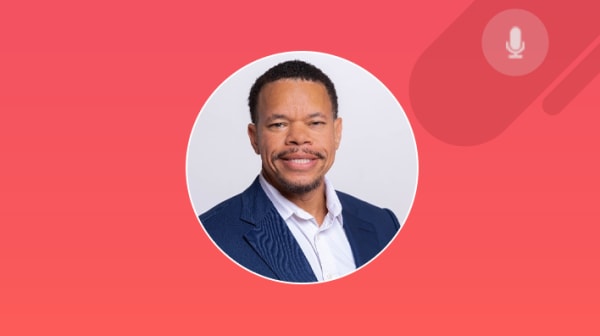
Queer inclusion at work is the practice of creating a workplace environment that is welcoming, supportive, and respectful of LGBTQ+ employees. In this podcast, Delshad talks about the struggles and challenges these individuals face in society.
Key Takeaways
- Exclusion starts before the interview. Recruiters unfamiliar with pronouns or the distinction between birth name and chosen name reject LGBTQ+ candidates at the shortlisting stage — often without realising it.
- Microaggressions are more dangerous than overt discrimination. Overt acts can be reported and redressed; microaggressions accumulate quietly and hollow a person out from the inside.
- Constant vigilance destroys productivity. Employees in perpetual fight-or-flight mode at work can never bring their whole selves or perform at their best — the mental health toll is cumulative, not episodic.
- Pay is not the top retention lever. LGBTQ+ professionals routinely leave higher-paying jobs for lower-paying ones when the new employer genuinely understands them.
- Organisations are catalysts of societal change. A clear top-down stance doesn't stay inside the office — sensitised employees become more accepting parents, friends, and neighbours.
- Allyship starts with non-judgment. One practical habit: notice when you're judging, take a step back, and — at minimum — keep the judgment to yourself.
In Delshad's Words
On microaggressions
Microaggressions are like termites. From the outside, the tree still looks nice, strong, and sturdy — but inside they eat into it little by little. Before you know it, the entire tree gets uprooted.
The overt aggressive behaviour can be reported, can be redressed. Microaggressions over a period of time literally kill the enthusiasm, the zeal — that's why they are more dangerous.
On mental health at work
If you're constantly watching your back, constantly walking on eggshells, you can never bring yourself to work confidently, can never be fully relaxed, can never be 100% productive. It will never happen.
There have to be times in the life of a person when they are really relaxed. That's when you are most productive.
On what keeps LGBTQ+ employees — or loses them
Not everything is about the paycheck. If another company understands your needs as an LGBT person, chances are you'll readily move jobs even for lesser pay.
On the role of organisations
Organisations are not just playing a part — they are catalysts. They are the harbingers of change in any society.
Sensitisation isn't one session and done. When you sensitise a person, it's not only for the 8 or 12 hours they're in office. Automatically they become more understanding as a parent, as a friend — the change percolates through all of society.
On allyship
Non-judgment is the basic foundation of allyship. From non-judgmentalism stems acceptance. That only comes when judgment is thrown out the window.
About the Speaker
Squadron Leader Delshad Master is an Indian Air Force veteran, having served as an officer for a decade, in forward fighter bases across India. Post her retirement, she has been pursuing her many passions, one of which is theatre and films.
In her second innings, she's found her calling in supporting the cause of the LGBTQIA+ community.
As a Queer Sensitisation Catalyst, she writes, speaks and trains on Diversity, Equity & Inclusion, focusing specially on the Queer community. Towards this, she has earned multiple certifications from the Universities of Colorado, Minnesota, Pittsburgh and Stanford School of Medicine and has impacted hundreds of lives.
She's a trained and qualified Queer Affirmative Counsellor and is simultaneously penning two books; one for parents titled, ‘Help! My Kid's Queer' and a handbook for India Inc titled ‘Fostering LGBTQ+ Inclusion @TheWorkplace’.
Delshad is currently AVP D&I at Careernet Technologies.
Connect with her on Linkedin.
Show Notes
01:37 Tell us about your journey.
03:07 Can you share some insights into the specific challenges that LGBTQ+ individuals often encounter in the workplace?
06:16 How does workplace discrimination or harassment based on sexual orientation or gender identity affect the mental health of LGBTQ+ employees?
09:20 Can you elaborate on the concept of microaggressions and their impact on the well-being of LGBTQ+ individuals in professional settings?
15:14 In your experience, how do unequal treatment and limited advancement opportunities affect LGBTQ+ professionals' overall sense of belonging and career satisfaction?
18:36 How can organizations effectively address mental health stigma within the LGBTQ+ community and promote an open dialogue about well-being?