
Want to bring this to your team? Schedule a free Vantage Fit demo to see how mood tracking, guided meditations, and mindfulness minutes work alongside team challenges.
When we talk about employee wellbeing, the various health aspects of employees, like mental, physical, financial, spiritual - all come into play.
In an organization, leaders are responsible for driving positive change and improving the wellness of their workforce. Now, especially after the Covid-19 scenario, leaders have a bigger role to play to ensure that their employees are fit and healthy and protected at all times.
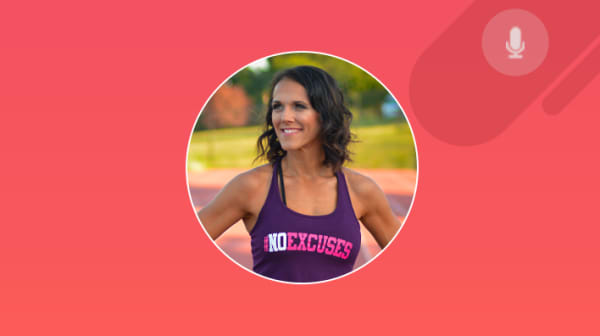
In this podcast, Traci Fisher talks about how employee wellness has become an essential aspect for employers. She further stresses how the leaders can show a path to their workforce, especially post-pandemic.
Key Takeaways
- Self-leadership is the first step of leadership. Traci argues no leader can credibly drive employee wellness without first modelling it — executives who practise their own sleep, movement, and stress habits give employees a visible template.
- Knowing what to do isn't the problem; doing it is. Her coaching focuses on the wellbeing layer — the thoughts and emotions between knowing you should move and actually tying up your sneakers — because the wellness protocol alone never moves the needle.
- The 3R communication loop: receive, reflect, request. Leaders jump straight to the ask; Traci's fix is to receive the person (the Zulu "Sawabona" — I see you), reflect back what they said, then make the request. That sequence is culture-building before it is communication.
- Use the 3D process to build wellness programs that land. Discover what's actually true for employees (a parent with COVID, financial stress), design around that, then deliver. Generic "lose the weight" or "walk more" prescriptions get tuned out.
- Stop shoulding on employees. Self-determination theory gives three levers — competence, autonomy, connection. Top-down prescriptions crush autonomy; offering a menu of options (treadmill, block walk, jumping jacks, phone-free time with a child) hits all three.
- Hybrid programs must be designed for every environment. A walkathon should ship with a treadmill option, a block-walk option, and a jumping-jack option so remote and in-office employees run the same challenge.
- Appraise performance, not feelings. Nobody can assess an employee's mental or emotional state, only their mental, emotional, and physical performance — set clean performance parameters and let people take care of themselves to hit them.
In Traci's Words
On self-leadership
When you are leading yourself and daring to practise taking care of yourself, several things happen. Your performance goes up, you feel better, your fulfilment is better. And then you start to model for other people what that looks like.
Self-leadership is the first step to leadership. Everything else flows from there.
On how people actually change
It's one thing to know the wellness aspect — how you fuel, rest and move your body and brain. Now let's talk about when it's time to tie up your sneakers or turn off Netflix or put down your phone. That's the key piece.
A lot of leaders have this immunity to change — "I work hard, I'm going to play hard," "I deserve this." Those belief systems got them to where they are. Unpacking them is how behaviour starts to move.
On listening and communicating
There's a South African greeting, Sawabona — "I see you, I receive you." People just want to be seen. Receive, reflect, and then you make your request. That is culture-building, right there.
For some people, they're not worried about moving more. They're worried about their stress levels because their parent has COVID, or finances. If leaders aren't really listening, we can't design a program around it.
On designing workplace wellness
Many well-meaning corporations design programs that are just the walking program or lose the weight. People are tired of being told that they need to lose the weight. They certainly do not want to be shoulded on.
Design a walkathon with a treadmill option, a walk-around-the-block option, a jumping-jack option. You want programs that are welcoming to everybody, regardless of their health and their personal environment.
For someone, it might be — what I want to do is spend 15 minutes a day with my child without me or them looking at their phone. Wellbeing is manifested differently in different people.
On measuring what matters
Nobody can know what you are feeling mentally or emotionally. They can only ascertain how you are performing. Set the performance parameters as a leader, and let people take care of themselves while they work to that level.
About the Speaker
Traci Fisher is an executive wellness coach. She was commissioned in aviation and served as a helicopter pilot for 7 years. After leaving the military, she started her career in the fitness & wellness industry.
Traci is a regular contributor to local media, a wellness consultant, motivational speaker, mother of three, and the managing director of two health and wellness companies based in Cleveland, Ohio.
Traci combines her wellness expertise with leadership training to help executives optimize their health and energy in service to performance both personally and professionally. Traci is passionate about helping leaders achieve their next level of success while simultaneously enjoying the experience of life.
Currently, she is working on her first book, The Healthy Leader, Self-Leadership for Optimal Health, Energy and Performance.
Connect with her on Linkedin.
Show notes:
(02:08) Please introduce yourself to the listeners.
(02:57) Would you like to throw some light on the model you created called Wellbeingness?
(04:34) How do you work with people?
(06:13) What do you think are the key areas that have been affected the most by the pandemic?
(07:09) As we have seen, the pandemic has had a severe impact on the mental health of everyone. Do you have any such experience?
(09:07) With lockdowns all around and work from home culture, people have become lethargic and the fitness motivation has somewhat disappeared, which has further given rise to health risks. So how do you think the people can overcome the negative effects of the lockdown on their health?
(10:58) How can the leaders intervene and get their employees up and running?
(13:12) Could you talk about how social interaction is so important while working from home and how leaders should keep themselves updated with the employees’ condition, thus making them feel they are cared for?
(14:35) So what do you mean by the 3R model in communication?
(16:10) What should employers do to get their employees to communicate and collaborate with everyone?
(18:20) Let’s talk about how the workplace scenario will change post-pandemic. What are the difficulties organizations will face when hosting a certain employee wellness challenge with half of its workforce working from home while the other half from the office?
(20:46) How can employers motivate their employees to give it their all in everything they do?
(22:44) How important do you think it is for employers to recognize the efforts of their employees who have achieved their wellness and fitness goals?
(23:31) In terms of yearly appraisals and reviews, do you think that wellness achievements can play a determining role in assessing employee performance over the year?
(25:31) Do you think employers can find the scientific approach to employee wellness useful?
(27:13) Is there any insight you would like to share with us that shows how you help your clients achieve their wellness goals?
(29:46) When the problem is scientific, the solution also has to be scientific. What is your opinion about that?
(31:00) What tip would you like to share with our listeners, especially the leaders, on how they can take employee health and revolutionize it post-pandemic?