
Take wellness deeper: Schedule a free Vantage Fit demo to see how lab report upload, health risk assessments, and biomarker dashboards support preventive workforce health.
Nowadays, women are equal contributors to the workforce in almost every industry. They are committed to aspiring at all organizational levels across sectors like medicine, technology, sales, etc.
However, most companies fail to address female health and support women's health in the office. Hence, women employees have had to compromise on home and work-life quality.
With a growing emphasis on creating a supportive work culture for all employees, it has become crucial to prioritize women's health in the workplace. After all, the organization's and the employees' growth depends on employee productivity, which depends on employees' overall health and well-being.
Key Takeaways
- Only 7% of people have their five wellbeing elements in harmony. Jackie cites Gallup's career, social, financial, community, and physical framework and argues career wellbeing is the foundation — 70%+ of waking hours are at work.
- Women show up with symptoms; the real work is the root cause. Exhaustion, overwhelm, insomnia, anxiety mask conditions that can escalate into heart disease, cholesterol issues, and breast cancer. Treat the surface and it keeps returning.
- The "Great Resignation" is now a "Great Reshuffle." Post-COVID, women are actively filtering employers by wellness culture, PTO, and hybrid flexibility — companies with toxic cultures and champagne-taste hiring plans are losing talent.
- Delayed PTO is a red flag, not a perk. Jackie calls out the common 90-day PTO waiting period: women with kids, menses issues, and doctor's appointments can't defer life by three months. It signals leverage, not balance.
- Masculine-coded, production-first cultures burn everyone out. A win-win culture blends masculine action with feminine service — aligned values, customer focus, and systems that treat people as whole, not as throughput.
- EAPs fail when they go unused. Jackie helped roll out employee assistance programs in the 1990s and watched stigma kill utilization — employees feared confidentiality leaks and job risk. Modern wellness programs need weekly, normalised promotion to break that ceiling.
- Inspiration beats motivation. Team walks, celebrated water-and-fruit streaks, 7,000-step goals shared publicly — she argues companies underestimate how much inspired action (not top-down motivation) actually drives engagement.
In Jackie's Words
On what women are really bringing to work
Women come to me with symptoms, and those symptoms are really masking a root cause. Exhaustion, overwhelm, lack of sleep, anxiety — that's distress that can magnify internally into heart disease, cholesterol problems, breast cancer.
Well-being is comprised of five elements — career, social, financial, community, and physical. They can't be compartmentalised. Only about 7% of the population actually have that harmony, per Gallup.
On the post-COVID workplace
Women finally reached the boardroom, and the great resignation is now really the great reshuffle. People are looking for jobs and work cultures that fit their wellbeing profile.
Some companies only allow PTO after 90 days. Women have children who get sick, menses issues, doctor's appointments, families to support. That's a company trying to leverage — not roll out work-life balance.
On culture and women's health
Corporations are known to operate in a masculine format — production, production, production, not so much about the people. Type A people burn out just as much. Women's health isn't getting addressed unless the culture deliberately serves people.
Write out your core values before you take the job. Your core values are what you want to match within an organisation — and the company has to back it up, follow up with it, be it. Not just show and tell.
On wellness programs that actually work
Employee assistance programs had a stigma. People were scared their personal information would get heard incorrectly or they'd lose their job. If it's not utilised, it's not successful.
Promote wellness within the organisation weekly — even daily. "Hey, if you've got things going on at home and need 20 minutes just to be heard, use the program." Normalise it.
Celebrate team members who are measuring their wellness — the person adding water and fruit, the one doing 7,000 steps a day. Inspiration is what companies are under-recognising. Without inspired action, motivation falls flat on its face.
On taking her own health into her own hands
I went through early menopause in my 40s. It was traumatic, and even my doctor didn't know what to do. My company didn't offer an alternative path, so I had to figure it all out by myself. That's where women's health gets ignored — not always on purpose, but companies don't know what they don't know.
About The Speaker
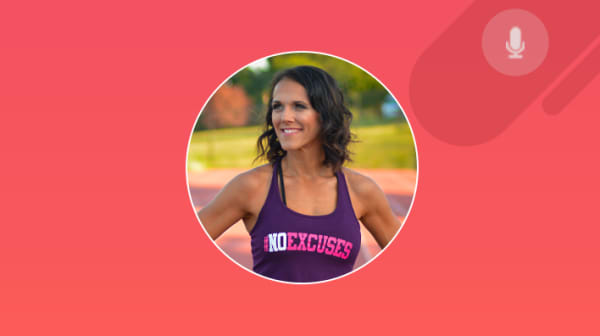
Jackie Ruka is a Professional Happyologist who is on a mission to transform the definition of success and pivot toward a more positive quality of life in which we work and live. She turned her Mental Health career on its head and utilized her human behavior expertise as an award-winning Sales and Marketing pro launching billion-dollar consumer brands. Jackie is also a Certified, Harvard-trained Leadership and Success Coach from Hahnemann University and Medical School and BS from Roger Williams University.
To know more about Myah, connect with her on LinkedIn.
Show Notes
(01:36) What are some women's health issues in your eyes? What is the most important issue in women's health?
(04:40) Are women embracing the overall dimensions of well-being?
(06:17) Do you think the socio-cultural factors hamper women's well-being at the workplace?
(10:29) How can workplaces support female employees' health?
(14:59) Do you think women's health often gets neglected in the workplace because of the various stigmas attached?
(27:06) Do you think employers should feel less embarrassed and come forward to discuss the underlying health issues and support their female workforce?
(30:30) How can organizations revive their corporate wellness programs to support women's health?