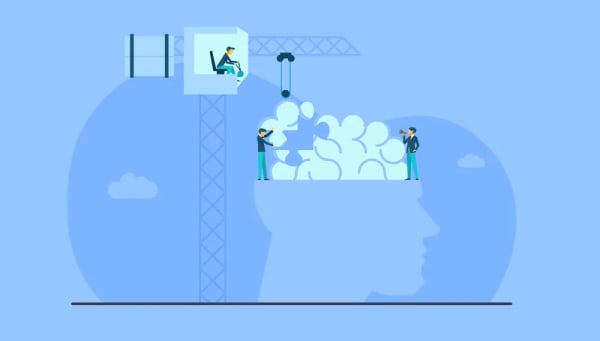

Mental exhaustion is the feeling of extreme mental fatigue from prolonged workplace stress. Left unchecked, it can tip into burnout, which the World Health Organization links to chronic workplace stress and which affects roughly 23% of employees worldwide. The earlier you catch the signs, the easier they are to reverse.
At Vantage Fit, where we build wellness programs for organizations, we see how often it gets mistaken for ordinary tiredness until it tips into burnout.
Below, you'll learn how to recognize mental exhaustion, tell it apart from everyday stress and burnout, and recover from it.
How is mental exhaustion different from stress and burnout?

Mental exhaustion sets in when your brain is kept in a heightened state of activity for too long without real rest, so it can no longer recover between demands.
According to psychologist Sheva Assar, Ph.D., it is a form of mental fatigue that dulls your cognitive processing after prolonged stress, leaving you emotionally drained and mentally spent.
There is a biological reason it feels this way.
Researchers at the Paris Brain Institute found that hours of demanding mental work cause a byproduct called glutamate to build up in the prefrontal cortex, the part of the brain that manages focus and decisions.
To protect itself, the brain effectively slows you down, which is why a drained mind reaches for a sugary snack or endless scrolling instead of the hard task in front of it.
Besides, the word "mental" refers to cognitive skills like thinking, decision-making, and problem-solving, while "emotional" refers to how you process, identify, and express your feelings. You can experience both at once, and together they leave you detached, unmotivated, apathetic, and trapped.
It is also easy to confuse everyday stress with mental exhaustion.
Everyone experiences stress, and it is natural for the body to react to new or overwhelming situations. But when stressors never let up, they wear down your body's natural defenses and build into mental exhaustion, and if nothing changes, into burnout. Learning to name what you are feeling is often the first step toward addressing it.
Here is how everyday stress, mental exhaustion, and burnout differ:
| Everyday stress | Mental exhaustion | Burnout | |
|---|---|---|---|
| What it is | A normal, short-term response to a specific demand or deadline | Cumulative mental fatigue from stress that never lets up | The end stage of chronic, unmanaged workplace stress (WHO) |
| How long it lasts | Hours to days; fades once the trigger passes | Weeks; persists even after a good night's sleep | Months; does not lift without real change |
| How it feels | Alert and pressured, but still coping | Drained, foggy, detached, low motivation | Empty, cynical, unable to function at work |
| Can you bounce back? | Yes, quickly, with normal rest | Yes, with deliberate recovery and habit change | Slowly; often needs time off and professional support |
What Causes Mental Exhaustion At Work?

Mental exhaustion can happen to anyone at any time, especially at work, where there are a lot of stressors. Workplace stress is inevitable and can get triggered due to many factors like job dissatisfaction or workload pressure.
Long-term stress can cause exhaustion and mental fatigue. Although many confuse depression, anxiety, and stress as mental exhaustion, those are just signs of it. When they all accumulate, you experience total physical and mental exhaustion.
Stress at work can take many forms. A high-demand, risk-oriented job may cause poor management or difficulty managing tasks and priorities.
No matter the reason, leaving work at work is not always possible. Workplace stress can even lead to burnout if left unchecked. It could spill over into your weekends when your workplace does not prioritize healthy boundaries and work-life balance.
Managing stress before it builds up is what keeps everyday pressure from hardening into exhaustion.
Here are a few more factors that might cause mental exhaustion at work -
Emotional stress and prevalent negative emotions.
Exposure to chronic stress and uncertainty.
Difficulty juggling multiple tasks and commitments.
Strained relationships both at work and in personal life.
Poor self-care.
A corporate health and wellness strategist explains why chronic stress is so difficult to detect from the inside:
"People are in such stress states all the time, it's hard for them to know or feel not stressed, because we're constantly in this stressful state, which is dangerous."
— Claudia Grace, Corporate Wellness Coach | Listen to the full episode
5 Signs Of Mental Exhaustion At Work
Work-related stress is inherent, and it often leads to burnout. Burnout at work has become the invisible pandemic often overlooked because of the hustle and grind culture. But the World Health Organization has defined burnout as the tip of the vital exhaustion iceberg.
A recent study has shown that almost 23 percent of employees worldwide experience burnout or mental exhaustion at work.
You might be on the verge of burnout if your work requires a lot of time and you have little left for your personal life. If you feel exhausted or drained by work demands and are always in a bad mood, there's a high chance you're mentally exhausted.
One of the key factors of mental exhaustion at work is when you feel like you're overextended or exhausted by your work.
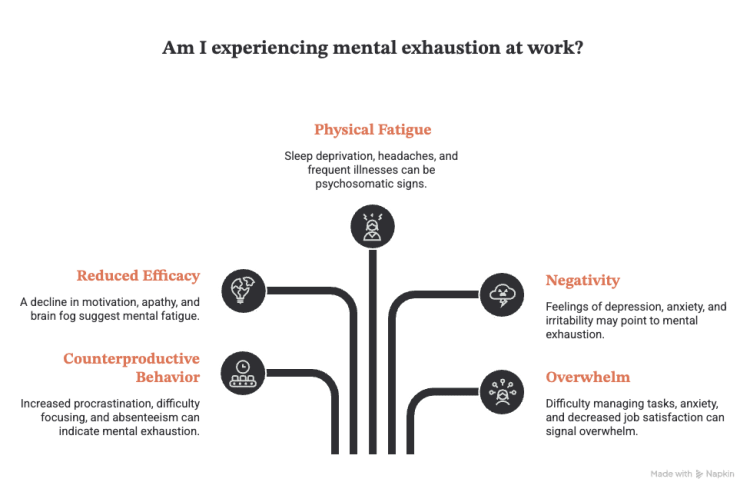
But here are five more signs and symptoms of mental exhaustion at work to give you a better insight into knowing if you need a break -
1. Counterproductive Work Behavior
"Balance in work is not better time management, but better boundary management. Balance means making choices and enjoying those choices." — Betsy Jacobson
When you're mentally exhausted, you feel drained and lack the motivation to do even the most basic work. You might be delaying or postponing the easiest tasks because you're not feeling like doing them.
It is because when you're mentally exhausted, you're emotionally drained too.
Long work hours, lack of recognition and appreciation, and low job satisfaction can cause mental exhaustion and affect productivity. And when you're exhausted, you're more likely to make errors at work.
Here are a few signs that you are experiencing mental fatigue at work-
The tendency to procrastinate increases.
It has a negative impact on your ability to work effectively.
You might find it difficult to keep focus and solve problems.
You might find it challenging to manage your time and work commitments.
Finding yourself calling out of work more often leads to work absenteeism.
2. A Reduction In Professional Efficacy

When you're mentally exhausted, you will lack the motivation to work or communicate with your colleagues. You will find yourself hesitant towards doing the minimum at work.
There is an increased distance between you and your job as you might find yourself delaying or postponing important tasks, improving skills, or even completing projects and meeting deadlines. You're more prone to procrastinate and feel zoned out at work.
Thus, as a result, your professional efficacy can be negatively affected due to mental exhaustion.
Here are a few signs of your experiencing mental fatigue at work -
A decline in motivation and productivity.
Experiencing apathy and detachment from work.
Experiencing brain fog and decreased mental clarity.
Having problems recalling and retaining information.
Lack of interest or easily distracted from your work.
Organizations that give employees tools to monitor and act on their mental state early can interrupt this pattern before it deepens.
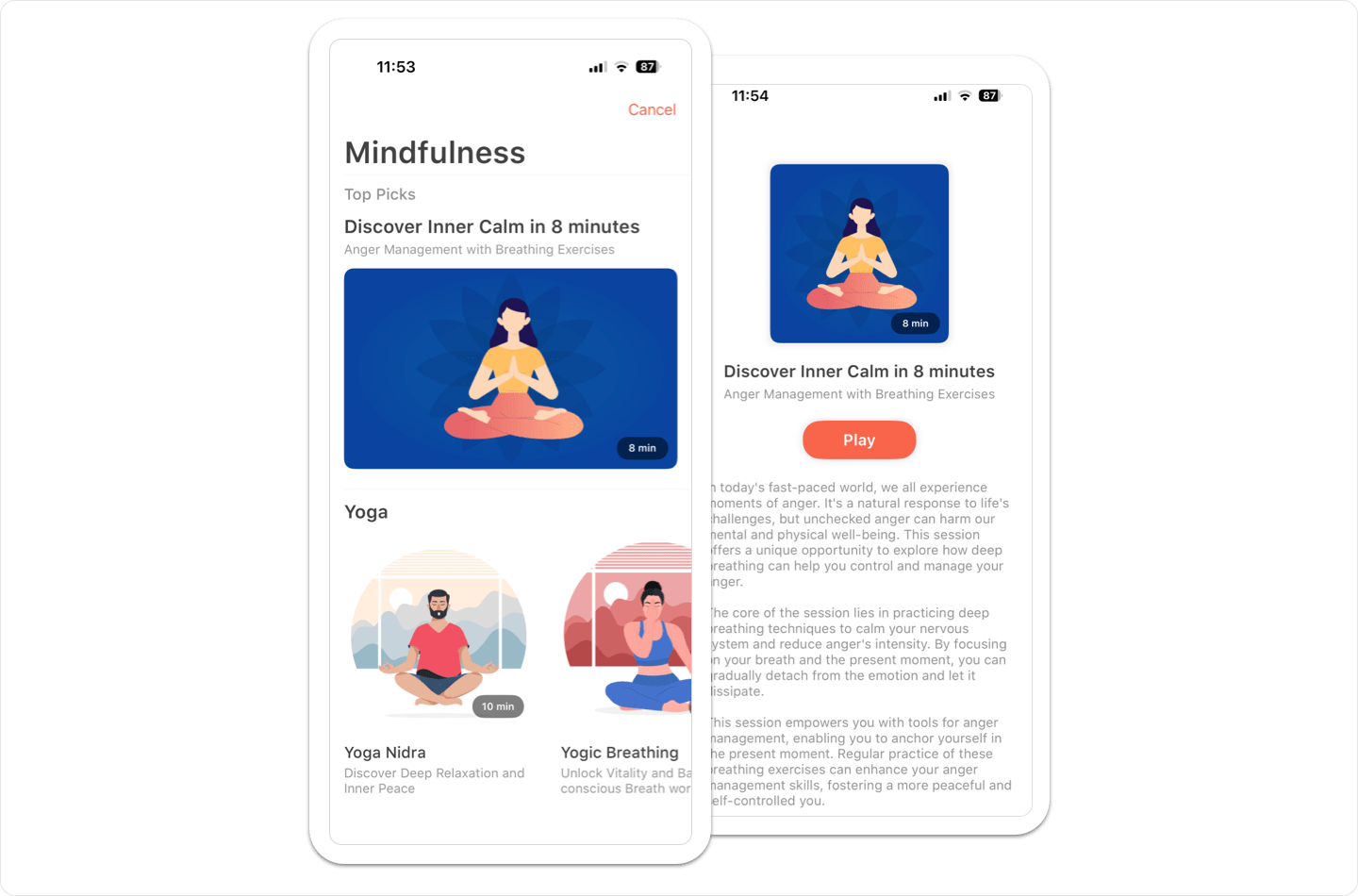
Vantage Fit supports this with Mood Meter for daily emotional check-ins, a Guided Meditation Library with sessions for focus and relaxation, short guided mindfulness sessions, and a Wellness Score that gives HR leaders an aggregated view of team well-being.
A 24-week workplace study found that employees who fell short on physical activity paid for it in sick days: those doing under 75 minutes a week had 3.5 times the illness-related absenteeism of colleagues who met the recommended 150 minutes.
3. Physical Fatigue And Energy Depletion
"Your energy is currency. Spend it well." — Adrienne Bosh
When you're mentally exhausted, it affects your physical health too and can manifest psychosomatically. The stressors at work can accumulate and result in various bodily ailments, leading to body exhaustion, i.e., your body is always stressed out.
It can be anything from experiencing sleep deprivation to changing sleep patterns. It can also be your inability to perform productively due to falling sick more frequently.
Here are a few more signs of experiencing physical fatigue as a result of mental exhaustion-
Lack of sleep or unable to fall asleep.
Experiencing frequent headaches, migraine, and body aches.
Experiencing unexplained frequent cold and fever.
High blood pressure and irregular heart rate.
Bowel irritability and upset stomach.
Sense of overall unwellness.
Try out: Vantage Fit's Sleep Challenge for Employees
4. A Persistent Feeling Or Emotion Of Negativity

You will also experience other mental health symptoms when you're mentally exhausted. It negatively impacts your mental health as it triggers your sympathetic nervous system leading to feelings of panic, anxiety, and worry.
You're more prone to negativity, and since your thoughts are closely linked to your feelings, you become gloomy when you're not feeling good. You're more cranky and easily irritable and frustrated with your work.
Again, if you see yourself being overly judgemental and critical of your colleagues or harsh about your organization, that might be another sign of you being mentally exhausted.
The following are some more signs of exhaustion causing mood swings:
Depression and a tendency to express negativity.
Feeling disconnected and isolated from reality.
Unable to perform complex tasks or meet deadlines at work.
Constantly feeling overwhelmed and having severe anxiety.
Feeling of confusion and lack of motivation to do even the simplest of tasks.
Strained relationships both at work and in personal life.
Not paying attention to your overall wellness and happiness.
5. A Feeling Of Pressure And Overwhelm At Work
"It's also our collective delusion that overwork and burnout are the prices we must pay in order to succeed." — Arianna Huffington
Exhausted employees often cannot handle the pressures of their jobs. If you're mentally exhausted and tired, it can be quite challenging to meet the demands and work on them effectively.
You might find yourself feeling pressure to succeed, without time to finish your work or do a good job, or without time to plan for your day and proactively deal with work demands.
Since your work schedule demands more time and energy, so you hardly find any left to meet your personal need or self-care programs. It, in a way, hinders your ability to focus and concentrate at work.
Even the slightest tasks might seem like a burden to you, and you get easily overwhelmed upon the thought of its completion.
Here are a few more signs of you being overwhelmed at work due to mental exhaustion -
Increased procrastination and avoidance at work.
Difficulty meeting important tasks and deadlines.
Experiencing burnout and extreme anxiety at work.
A feeling of helplessness and a tendency to overthink.
Inability to manage daily tasks.
Decreased job satisfaction.
Suggested Read: 7 Ways You Can Help Employees Dealing With Work Anxiety
Tips To Prevent Mental Exhaustion
Overcoming mental exhaustion can be challenging but not impossible. It can happen to anyone, and when you're mentally exhausted, you're on the verge of a breakdown too. It can make even the simplest tasks more challenging and stressful.
However, it takes little effort and awareness to change the patterns, which leads to feeling mentally drained. You can take a few preemptive steps to lower your chances of getting mentally exhausted.
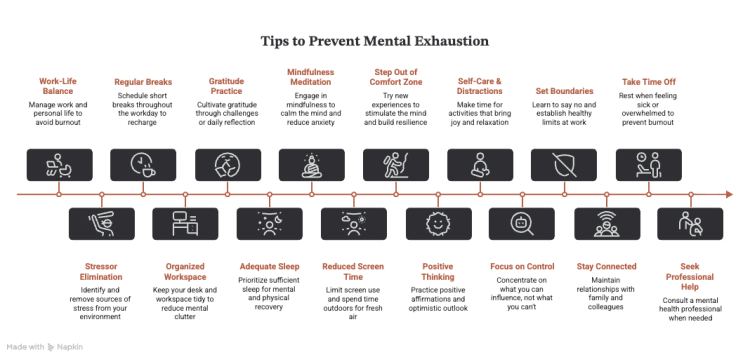
Here are a few tips on how to avoid mental exhaustion at work -
Try to manage work work-life balance.
Identify and try to eliminate the stressors.
Schedule your day to take regular breaks in-between work.
Clear up your desk and organize your workspace.
Practice gratitude or take part in a gratitude challenge at work.
Try to get an adequate amount of sleep.
Practice mindfulness meditation or try these mindfulness exercises at work.
Try to reduce your screen time and get outside for fresh air.
Try to get out of your comfort zone and do something new.
Practice positive thinking and listen to positive affirmations.
Make time for self-care and positive distractions.
Focus your attention on what you can control rather than what you cannot.
Learn to say no. Set up healthy boundaries at work.
Keep in touch with your family or colleagues by being more open.
Refrain from exhausting yourself with more work. Take some time off if you're feeling sick.
Seek out a mental health professional or therapist
How Do You Know When You Need Professional Help?
Talking to a therapist or professional help is always a better idea. It would be best if you did not neglect it, as prevention is always better than cure. Therapy is the most effective way to treat mental exhaustion.
The following are some signs that you should seek help-
Frequent panic attacks.
Negative thoughts or self-harming thoughts.
Depression.
Severe anxiety.
More absences or taking sick leaves from work.
A sudden outburst of emotions or crying.
Lack of attention to self-care or hygiene.
Always worrying about losing your job.
What managers and organizations can do
Mental exhaustion is rarely just an individual problem. When it shows up across a team, as rising absenteeism, slipping output, or people going quiet, it usually points to workload and culture rather than effort.
Managers can help by supporting mental health in the workplace: setting realistic workloads, normalizing breaks and time off, checking in early rather than after a breakdown, and giving recognition that is easy to forget under pressure.
The strongest signal, though, is how a manager shows up in a hard moment.
I recall a difficult phase back in 2024 when my own manager, Alif Ahmed, spoke openly about his own setbacks and vulnerabilities. It made me feel seen and far less isolated, and his humility had a ripple effect: the whole team felt safer opening up, knowing their struggles would be met with understanding rather than judgment.
That kind of openness does not replace professional support, but it fills a gap no policy can: the need for human connection.
The business case is real, too: mental exhaustion is a quiet driver of attrition, and replacing an employee who burns out and leaves can cost one-half to two times their annual salary, according to Gallup.
Structured corporate wellness programs make this consistent rather than ad hoc, building the movement, mindfulness, and check-in habits that keep everyday stress from hardening into exhaustion.
Recommended read: The Corporate Mental Wellness Guide lays out how organizations can build the culture and programs that keep exhaustion from taking hold.
Summing It Up
Although it might sound easy to wave away mental health issues at the moment, it can have a deliberate long-term effect on you.
Untreated mental exhaustion can negatively affect your overall wellness. It can also hinder both the dynamics of your personal and professional relationships.
But even though it might feel overwhelming, mental exhaustion doesn't last forever. It doesn't happen overnight, and you likely won't recover overnight.
However, with support, self-awareness, and professional help, you can begin to overcome mental fatigue and develop habits to help yourself thrive again. Paying attention to your emotional state in all of its nuances and focusing on preventive self-care will help improve your mental health.
I hope this article helped you to get a better understanding of mental exhaustion and how to work on it.
Frequently Asked Questions
What are the first signs of mental exhaustion at work?
The earliest signs are cognitive and emotional: trouble focusing, forgetfulness, procrastinating on easy tasks, irritability, and feeling drained even after rest. Physical symptoms like headaches, disrupted sleep, and frequent minor illness often follow. Noticing them early makes them far easier to reverse.
What's the difference between mental exhaustion and burnout?
Mental exhaustion is the cumulative mental fatigue that builds when workplace stress never lets up. Burnout is where it ends if nothing changes, the chronic stage the World Health Organization ties to unmanaged workplace stress. Exhaustion is the warning; burnout is the breakdown.
Why is my job mentally draining me?
A job drains you mentally when demands consistently outrun your recovery: long hours, constant context-switching, little control, or no appreciation. Your brain stays switched on without the rest it needs to reset, so fatigue builds. It is a signal to adjust workload and boundaries, not a personal failing.
How long does it take to recover from mental exhaustion?
There is no fixed timeline. Mild mental exhaustion can ease within a few weeks of deliberate rest, boundaries, and a lighter load. Deeper exhaustion takes longer and may need time off or professional support. It did not build overnight, so recovery will not either, but it does reverse.
Can workplace wellness programs help prevent mental exhaustion?
They can help. Regular movement and mindfulness build resilience against stress; one 24-week workplace study found employees getting under 75 minutes of activity a week had 3.5 times the illness-related absenteeism of those meeting the recommended 150 minutes. They work best alongside realistic workloads and a culture that respects boundaries.