
Burnout is up and budgets are tight, so "we have a wellness program" no longer impresses anyone. What employees actually notice is whether those programs help them feel healthier at work. A Business Group on Health survey report found that 93% of employers plan to maintain or expand their well-being offerings, with 73% maintaining their current corporate wellness programs and another 20% expanding them.
Across the HR teams that run Vantage Fit, the initiatives that move the needle share one trait: they blend several dimensions and they get measured. This blog walks through 17 employee wellbeing initiatives you can put into action in 2026, grouped by the area of health they support, along with how to implement them and how to measure whether they work.
Key Takeaways
- Employee wellbeing initiatives span five areas: physical, mental, financial, social, and workplace health.
- The strongest programs blend several areas rather than leaning on one, so support reaches every employee.
- Roll them out with a survey-first, pilot-then-scale approach, and assign each initiative a clear owner.
- Measure success with three signals: participation rate, absenteeism and healthcare trends, and employee sentiment.
- 93% of employers plan to maintain or expand their wellbeing offerings, per a Business Group on Health survey.
What are employee wellbeing initiatives?
Employee wellbeing initiatives are the programs, policies, and activities an employer offers to protect and improve staff health at work. They cover five areas: physical, mental, financial, social, and workplace wellbeing, and range from fitness challenges and mental-health support to recognition programs, financial-planning workshops, and flexible work. The most effective programs combine several areas, so support reaches every employee instead of a single group.
For the bigger picture on why this matters, see our guide to employee wellbeing and the benefits of employee wellness programs.
Why should you offer wellbeing initiatives for employees?

The transition of work environments has highlighted that employee health and wellness will remain the prime focus for human resource managers. Rising burnout and disengagement among workers have sparked a new revolution of wellness initiatives. Many employers have already considered revamping their wellness strategies with the help of corporate wellness companies to meet employees' health expectations.
How do you scale wellbeing initiatives?
One of the biggest challenges for HR is moving beyond one-off events to sustainable, holistic initiatives. Modern platforms like Vantage Fit serve as an all-in-one hub for these efforts, allowing companies to track real-time engagement across multiple wellness pillars. While traditional wellness programs often struggle with participation rates as low as 20-30%, a gamified, mobile-first approach helps Vantage Fit clients consistently reach a 70% engagement benchmark.
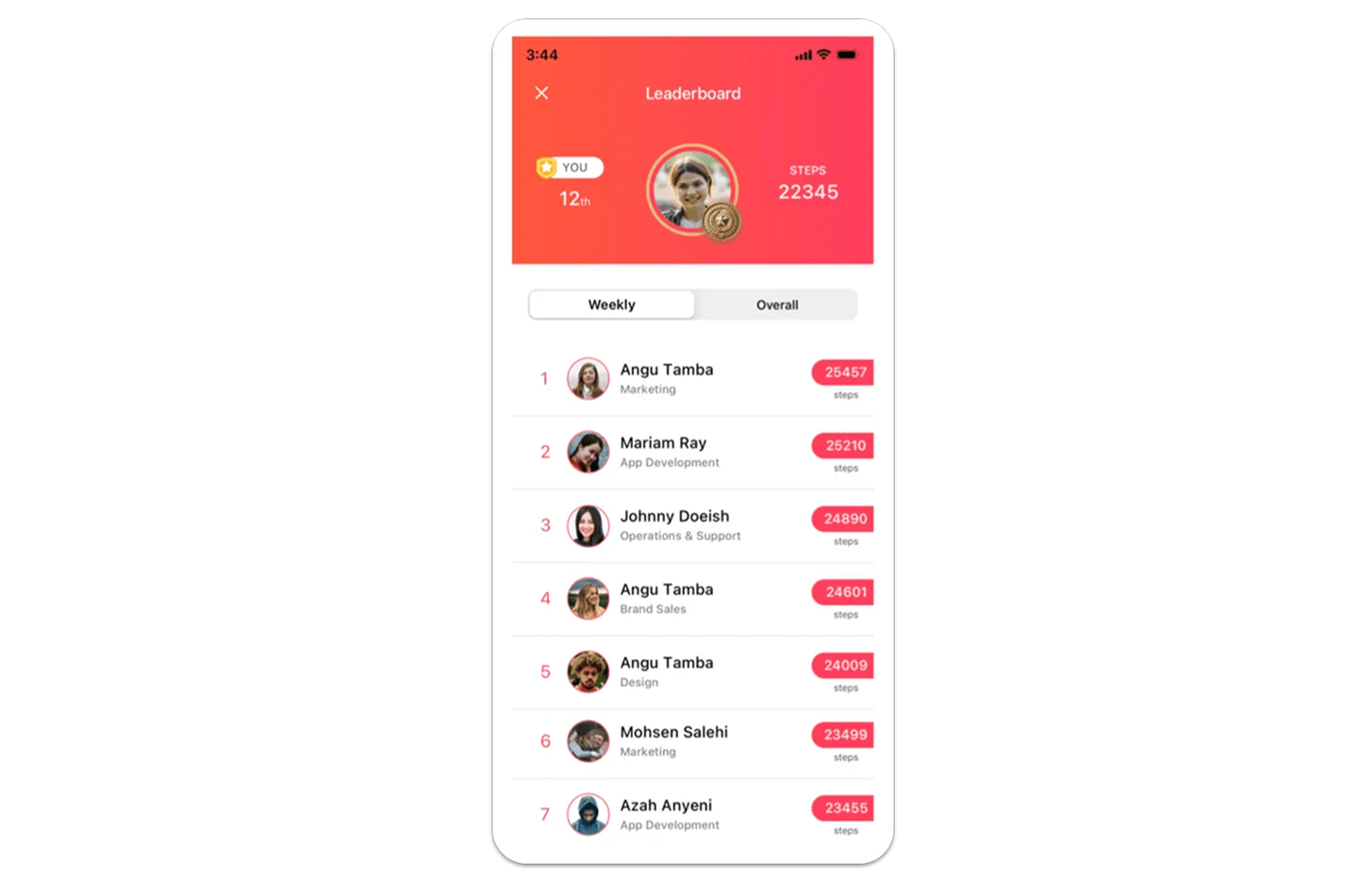
Whatever the situation is, deploying a company-wide virtual wellness program is a quintessential factor across any employee program. So what measures have you taken to meet your employee wellness expectation?
If not, here is a newly updated list of wellness initiatives to help you get your employees back into health and fitness. Remember that you can tailor this list to your company's specific values and requirements.
The 17 initiatives below are grouped by the dimension of wellbeing they support, so you can build a balanced program instead of stacking up ideas from a single area.
What are physical and nutrition wellbeing initiatives?
Physical and nutrition initiatives keep employees moving and well-fueled through the workday, countering the health toll of sitting for hours. These are among the easiest to launch and to measure, which makes them a strong starting point for any new program.
1. Address sedentary behavior and encourage physical activity

Sitting all day at work can have negative health impacts on employees. HRs can implement initiatives to address sedentary behavior and promote physical activity in the workplace.
This can include providing opportunities for employees to take active breaks, organizing walking meetings, or providing access to on-site or discounted off-site fitness facilities. HRs can also promote the use of stairs, encourage stretching breaks, and run step challenges to make movement social.
How to launch it:
- Add sit-stand desks or set hourly stand-and-stretch reminders.
- Schedule walking meetings and nudge people toward the stairs.
- Kick off a company step challenge with a shared goal.
2. Run wellness challenges and walkathons

As per the CDC, 80% of American adults never received the required amount of exercise per week. Overwork and lack of time are critical reasons for lower participation, and the situation can be worse when your entire workforce works from home.
Conducting fitness challenges is one of the fastest ways to keep employees healthy and engaged. Healthy competition boosts passion, productivity, and fitness motivation, which is why many corporate wellness programs treat wellness challenges as their flagship initiative.
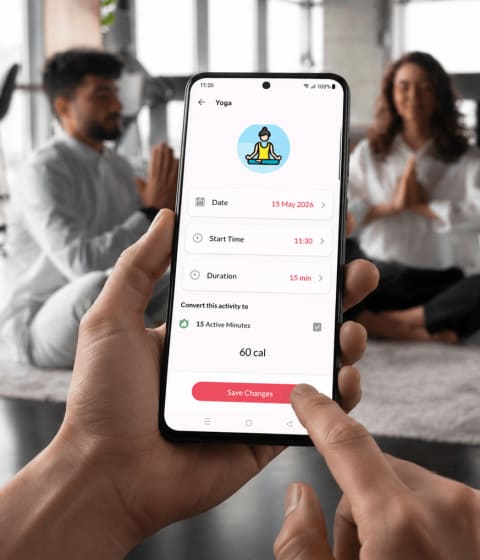
A virtual walkathon is a popular format: employees log in to a shared platform and complete assigned health goals together for a common cause. With Vantage Fit you can run challenges of every kind, from step contests to nutrition and smoke cessation programs, all with automated tracking.
How to launch it:
- Pick a format: step contest, walkathon, or nutrition challenge.
- Set team-based goals and a simple prize or recognition.
- Track participation automatically so no one tallies by hand.
Suggested Read: 8 Spring Wellness Challenge Ideas for Your Workforce in 2024
3. Provide corporate fitness programs

Keeping up with physical fitness while working may not go in tandem for some of your employees. One way to boost your employee's fitness motivation is by providing corporate fitness programs.
Offering fitness classes is one way that has gained popularity among companies. Your employees can leverage fitness benefits from on-demand fitness classes to customized diet consultations without visiting the gym.
How to launch it:
- Offer on-demand fitness classes employees can join from anywhere.
- Add discounted gym access or diet consultations as a benefit.
- Survey which class types your team actually wants first.
4. Promote healthy recipes and nutrition

Nutrition plays a crucial role in overall wellness. HRs can share healthy recipes and tips on healthy eating through newsletters, bulletin boards, or wellness workshops.
Providing healthy food options in the cafeteria or organizing healthy cooking demonstrations can encourage employees to make nutritious choices, leading to improved physical health and steadier energy through the day.
How to launch it:
- Share a weekly healthy recipe through your internal channel.
- Stock healthier options in the cafeteria and in meetings.
- Run a short cooking demo or nutrition workshop.
How can you support mental and emotional wellbeing?
Mental and emotional initiatives protect focus and resilience, and they signal that stress is taken seriously. These five give employees practical support before pressure tips into burnout.
5. Give relaxing meditation breaks

Stress management is an essential factor to consider. Meditation breaks between workdays are a great way to relax your employees. Give 10-minute no-talk periods that allow them to refocus their work and productivity. You can also provide a robust platform that gives access to mindfulness activities such as stress relief and building gratitude.
How to launch it:
- Block short, recurring no-talk periods into the calendar.
- Provide access to a mindfulness or meditation app.
- Ask managers to model taking the break themselves.
6. Offer mental health support

Mental health is equally important as physical health. HRs can organize workshops or seminars on stress management, mindfulness, or resilience.
Providing access to mental health resources, such as Employee Assistance Programs or counseling services, can also support employees in managing their mental health effectively.
How to launch it:
- Run regular workshops on stress management and resilience.
- Provide confidential counseling or an EAP.
- Publish where and how to get help, so no one has to hunt.
Suggested Read: Holiday Wellness at Work: HR's Guide to Reducing Stress
7. Introduce mental-health and recharge days
Always-on work quietly erodes wellbeing, so protected time off matters as much as any perk. Company-wide mental-health days, no-meeting blocks, and a clear right-to-disconnect policy give employees real room to switch off.
Unlike ad hoc leave, a scheduled recharge day signals from the top that rest is expected, not a favor employees have to ask for. That distinction is what makes it land.
How to launch it:
- Add company-wide recharge days to the shared calendar.
- Protect regular no-meeting blocks and honor them.
- Have leadership model taking the time off, visibly.
8. Train managers to support wellbeing
Employees experience wellbeing through their manager far more than through any policy document. Yet most managers are never taught to spot the early signs of burnout or to hold a supportive conversation.
Training managers to support mental health, by recognizing warning signs, running regular check-ins, and pointing people to resources, is one of the highest-leverage initiatives you can run. It scales support across every team at once instead of relying on a central HR team.
How to launch it:
- Train managers to recognize the early signs of burnout.
- Give them a simple check-in structure for 1:1s.
- Equip them with a clear path to refer or escalate.
9. Offer employee assistance programs (EAPs)
Health promotion and support services are essential investments in maintaining a healthy workforce. One such service is offering company-wide employee assistance programs.
An employee assistance program is a specialized wellness initiative designed to assist workers with tools and resources to solve personal issues like financial, workplace, or family concerns.
EAP counselors conduct thorough health risk assessments of your employees and provide critical solutions that help in boosting employee motivation.
How to launch it:
- Partner with an EAP covering mental, financial, and family issues.
- Offer confidential health risk assessments.
- Promote the EAP often so employees remember it exists.
What are financial wellbeing initiatives?
Financial initiatives ease the money stress that quietly follows employees to work. These two cover both protection and everyday confidence with money.
10. Enhance health insurance benefits

Comprehensive health insurance coverage is an important wellness initiative that HRs can provide to employees. HRs can evaluate and enhance health insurance benefits to cover preventive care, mental health services, and other wellness programs.
How to launch it:
- Review coverage for preventive and mental-health care.
- Add telehealth or wellness services to the plan.
- Explain the benefits clearly at open enrollment and after.
11. Run financial wellness workshops
Money stress follows employees to work and quietly drains their focus. Financial wellbeing initiatives address that head-on. Offer workshops on budgeting, debt management, and retirement planning, or give employees access to financial-planning tools and one-on-one counseling.
Pairing these sessions with a structured financial wellness program helps employees feel more confident with money, which removes one of the most common sources of chronic stress and its knock-on effect on productivity.
How to launch it:
- Host sessions on budgeting, debt, and retirement planning.
- Offer financial-planning tools or one-on-one counseling.
- Time key topics to real moments, like open enrollment or bonus season.
How do social wellbeing initiatives build connection?
Social and connection initiatives build the belonging that keeps people engaged and supported. This is the dimension most programs neglect, and the one employees tend to feel most quickly.
12. Recognize and connect your people
Social wellbeing is the area most wellness programs forget. People who feel seen and connected at work are more engaged and resilient under pressure.
Pair regular recognition with social wellness activities such as peer shout-outs, interest-based groups, and team rituals. Frequent, visible recognition through a tool like Vantage Rewards strengthens the sense of belonging that underpins social wellness and keeps remote teammates from drifting.
How to launch it:
- Enable frequent, visible peer recognition.
- Start interest-based groups and simple team rituals.
- Build a few social moments into every remote team's week.
13. Host a virtual lunch and learn

A virtual lunch and learn program is an effective way to regain your lost communication with your remote employees. It is a fantastic opportunity to discuss a matter at hand over an informal lunch meeting.
Your topics can vary from thought leadership sessions to personal development programs that give you and your employees a space to talk and exchange exciting ideas.
How to launch it:
- Pick a monthly theme and an internal or guest speaker.
- Keep it informal and optional to protect the mood.
- Record sessions so hybrid and remote staff can catch up.
What are workplace and flexibility initiatives?
Workplace and flexibility initiatives shape the everyday conditions people work in. These reduce daily friction and give employees more control over how, where, and with what tools they work.
14. Implement flexible work arrangements
Flexible work arrangements, such as remote work, flex-time, or compressed work weeks, can greatly improve employees' well-being. HRs can work with managers and employees to implement flexible work policies for better work-life balance.
How to launch it:
- Offer remote, flex-time, or compressed-week options.
- Set clear expectations so flexibility does not blur boundaries.
- Review policies with managers for fair, consistent use.
15. Use personalized, AI-driven wellness tools
One-size-fits-all programs lose people fast. Personalized, AI-driven wellness tools tailor nudges, challenges, and content to each employee's goals and activity level, which lifts participation well above generic programs.
Wearable integration and AI wellness apps also surface the aggregate trends you need to steer the program, without exposing any individual employee's private data.
How to launch it:
- Roll out personalized nudges based on each employee's goals.
- Integrate wearables so activity tracking is effortless.
- Steer the program with aggregate, anonymized trends only.
16. Run regular wellbeing surveys
No matter what you offer in your employee wellness program, running employee surveys and gathering feedback should be on your priority list.
Carrying out monthly wellness employee surveys, pulse surveys, or idea boxes can help you gather valuable employee feedback.
One such tool that makes the entire pulse survey process easy is Vantage Pulse. It is a leading employee survey tool by Vantage Circle that follows an intelligent tracking system and customization process to help you organize an effective employee survey.
How to launch it:
- Send short monthly pulse surveys or open an idea box.
- Keep responses anonymous to get candid feedback.
- Close the loop by acting on results and reporting back.
17. Provide work-from-home essentials
Offering ergonomic products has become crucial for determining employee happiness in remote settings. A supportive chair, an external monitor, or a desk-setup stipend signals that you care about how employees feel through a full workday, not just when they are in the office.
How to launch it:
- Offer a desk-setup stipend for home offices.
- Provide a supportive chair and an external monitor.
- Add home-office needs to your onboarding checklist.
How do you implement a wellbeing initiative?
The strongest initiatives are built around what your people actually need, not what looks good on a benefits page. A simple rollout loop keeps them grounded:
- Survey first. Ask employees what they struggle with before you choose a program. Feedback is the difference between an initiative people use and one they ignore.
- Start with a pilot. Launch with one team or one location, learn what works, then scale. A small pilot is easier to fund and easier to fix.
- Communicate and incentivize. Keep employees informed, explain the "why," and use rewards or friendly competition to drive early participation.
- Assign an owner. Give each initiative a clear owner in HR or a cross-functional wellness committee so it does not stall after launch.
For a deeper framework, see our guide to corporate wellness strategies.
How do you measure wellbeing initiatives?
An initiative you cannot measure is impossible to defend at budget time. Track three signals from day one:
- Participation rate. What share of eligible employees actually enrolled and stayed active? This is the fastest read on whether an initiative resonates.
- Absenteeism and healthcare trends. Compare absence days and health-related costs before and after launch to gauge real impact.
- Employee sentiment. Use pulse surveys and eNPS to see whether people feel the initiative is helping.
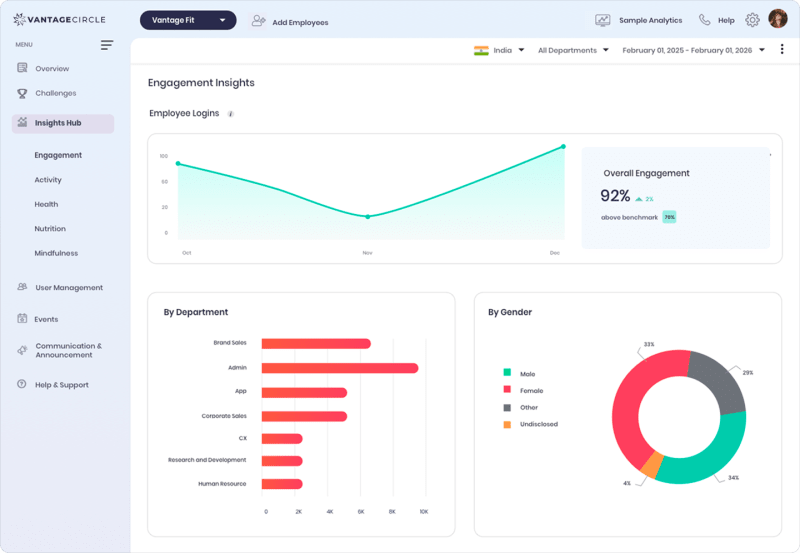
A platform like Vantage Fit brings these numbers into one place, so participation, engagement, and department-level trends show up on a live wellness dashboard instead of a spreadsheet. For a full list of what to track, see our guide to employee wellbeing metrics.
Takeaway
Every organization is unique in dealing with employee wellness issues. Factors ranging from industry, location, employee demographics, and company culture can greatly determine workplace wellness.
That is why addressing issues to avoid untimely burnout becomes an important responsibility for you as a wellness administrator.
Whatever the size of your company, putting more emphasis on employee health and happiness will benefit both you and your staff for several reasons.
Programs for improving employee well-being are essential for attracting top talent, keeping them content, and reducing absenteeism and attrition. The initiatives above are already offered by many of the top firms to work for. Start with one, measure it honestly, and build from there.
Suggested Read: 7 Employee Wellness Awards that Every Company Should Aspire to Win
Frequently Asked Questions
What are employee wellbeing initiatives?
Employee wellbeing initiatives are the programs, policies, and activities an employer offers to improve staff health across physical, mental, financial, and social dimensions, from fitness challenges to counseling and financial-planning support.
What are examples of employee wellbeing initiatives?
Common examples include wellness challenges, meditation breaks, mental health counseling, corporate fitness programs, financial wellness workshops, manager wellbeing training, recognition programs, flexible work, and regular wellbeing surveys.
What are the 5 ways to wellbeing initiative?
The 5 ways to wellbeing initiative are: Connect, Get active, Take notice, Learn, and Give.
How do you measure the success of a wellbeing initiative?
Track participation rates, changes in absenteeism and healthcare costs, and employee sentiment through pulse surveys or eNPS. Comparing these against a baseline shows whether the initiative is working.
How can employers encourage physical activity?
Employers can encourage physical activity by organizing fitness challenges, offering exercise classes, or providing standing desks.
How can wellness initiatives support mental health?
Wellness initiatives support mental health by providing access to counseling, offering mindfulness programs, promoting work-life balance, and training managers to spot early signs of burnout.