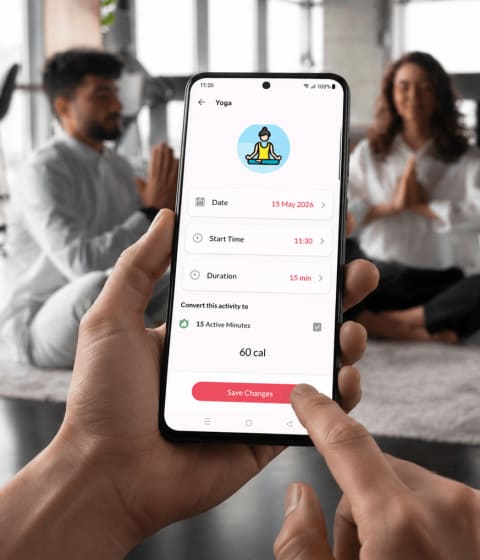

Most workplace wellness programs struggle to push past 20 to 30% sustained participation, and interest in outcome-based programs fell from 72% to 39% between 2017 and 2019. The fastest ways to lift participation are to strip out the friction that keeps people away: make the program easy to find, protect employee privacy, offer flexible options, add gamification and rewards, and have leaders join in visibly.
Get those right and the numbers move quickly. On Vantage Fit, IBS Software reached 88% engagement during a single 28-day challenge, and Serum Institute of India hit 99% participation, both far above the industry norm.
When participation drops, the benefits these programs are built to deliver, namely better employee well-being and productivity, go untapped. The good news is that it does not have to stay that way.
This guide breaks down what blocks participation, what a healthy participation rate actually looks like in 2026, and the strategies that turn a wellness program into something employees genuinely want to join.
What are the Barriers to Wellness Program Participation?

You can't fix low participation until you know what's causing it. In most workplaces, it traces back to the same eight barriers:
- Low awareness: people don't know the program exists, or how to join
- Wellness seen as optional: treated as a perk, not part of the workday
- Privacy concerns: reluctance to share personal health information
- Little leadership support: managers don't take part or champion it
- No time: rigid scheduling that ignores busy, frontline, and shift workers
- The "what's in it for me?" gap: no clear personal benefit to joining
- Incentives that miss: rewards that are either overdone or absent
- Wellbeing stigma: fear of being judged for needing help
Let's look at each one.
1. Lack of Program Awareness
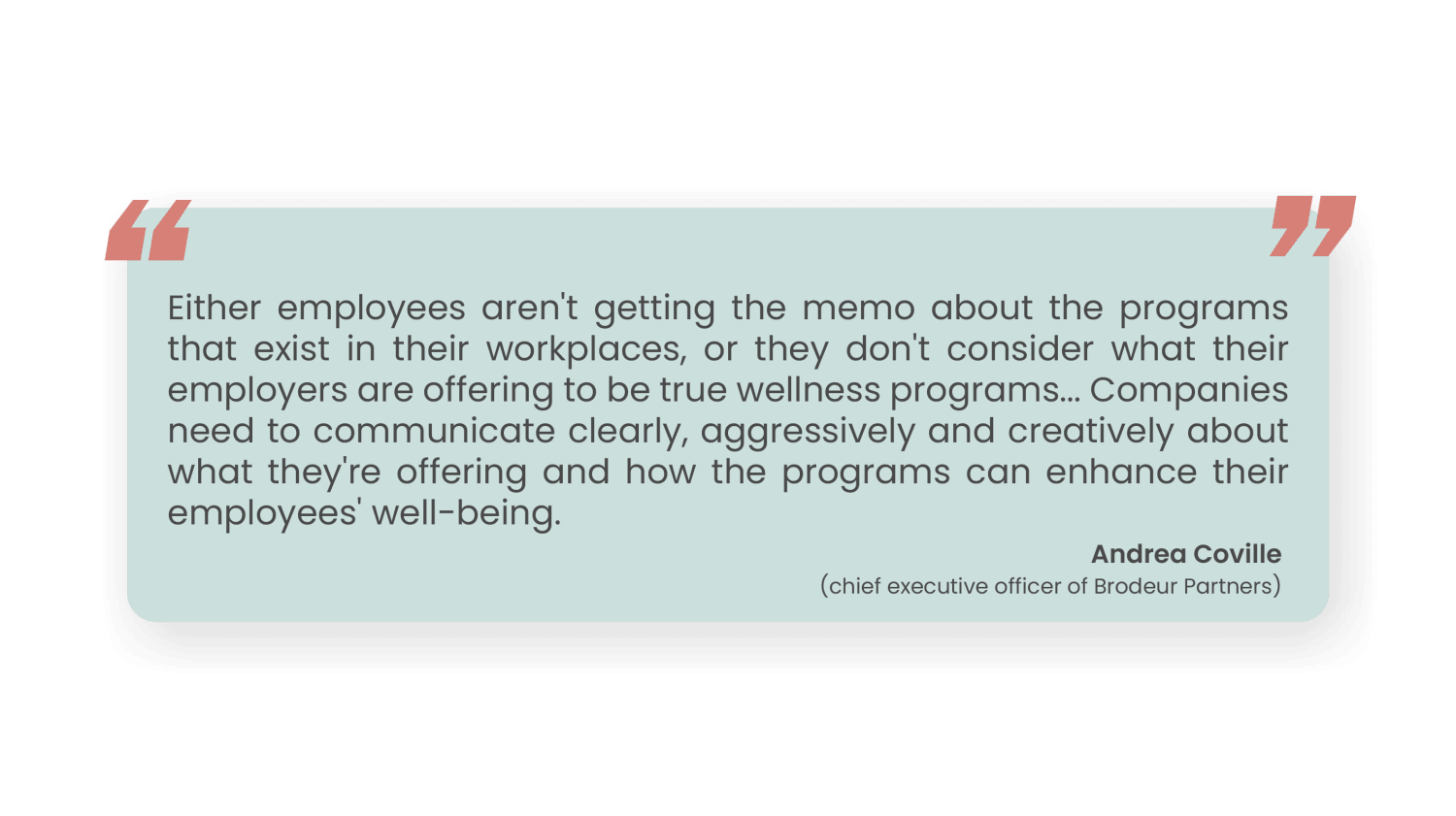
One of the biggest challenges in making wellness programs successful is simply getting the word out. If you think deeply, the adage "ignorance is bliss" doesn't really hold true when it comes to employee wellness programs.
A study revealed that while 70% of employers claim to have wellness programs, only 34% of employees are aware of them. Employees might hear about a wellness program but not receive enough details to understand how to participate or the benefits. This lack of detailed information can lead to confusion or disinterest.
For instance, if the specifics about how to join a program, what activities are included, or how wellness rewards work are not clearly communicated, employees might feel too uncertain to get involved.
They are already caught up with deadlines and duties. Why do you think they will put effort into enrolling themselves in some program they haven't heard much of?
Moreover, if information is only shared on the company's intranet or through physical posters, it might not catch the attention of all staff members, particularly those who work remotely or are not often in common premises.
Disconnect will cause disengagement.
2. Viewing Wellness as a Luxury and Not a Necessity
Many people think of wellness programs as something extra, like icing on the cake. They see them as nice-to-haves, not must-haves. This way of thinking can be a big problem for companies trying to help their employees get healthier.
A source indicated that many employees do not find worksite wellness programs relevant or appealing to their needs. Interest in outcome-based wellness programs dropped from 72% to 39% between 2017 and 2019, highlighting a decline in perceived value and relevance.
Moreover, ongoing studies show that wellness programs often only engage those who are already health-conscious, with less motivated individuals opting out of initiatives like office weight-loss challenges or gym memberships. For instance, gym memberships only benefit about 10-15% of employees who would have joined regardless.
3. Privacy Concerns

People are understandably cautious about sharing personal information, especially when it comes to their health risks. Wellness programs often ask for sensitive details like medical history, biometric screenings, or even mental health struggles.
This makes many people feel uneasy. They worry about how this information will be used, who will see it, and if it could come back to bite them. It's like handing over one's personal diary and hoping no one reads it.
If employees want to participate and share their health information, it has to be a free choice, not a coerced decision,..
– Dara Smith, an attorney at the American Institute of Retired Persons
As per a very informative article published in SHRM, a significant portion of data collected through wellness programs falls outside the safeguards of federal and state privacy laws.
However, Kate Bischoff, management attorney at SHRM-SCP, writes, "Employee health information gathered from any source, for any reason, must be kept separate and secure,... (data collected by a wellness program) should, whenever possible, be kept by the wellness program vendor and inaccessible to the employer."
4. Lack of Management Support
The role of leadership on workplace wellness program participation cannot be overstated. When leaders do not actively endorse or participate in these initiatives, it sends a clear message to employees that wellness is not a priority within the organization.
Employees often mirror the health behaviors of their leaders. If managers consistently prioritize work over wellness, it can create a culture where employees feel pressured to do the same.
For instance, if a wellness program encourages mindfulness breaks but managers are constantly sending urgent emails during these times, it undermines the program's intent. This inconsistency between espoused values and actual practices can erode employee trust and diminish program participation.
5. Time Constraints

Let's face it: life is busy. Between work, family, and personal commitments, finding time for oneself can feel like searching for a needle in a haystack. Wellness programs, while beneficial, often fall victim to this time crunch.
If wellness programs are scheduled at specific times that do not align with all employees' varied schedules, such as fixed hours during the workday, participation can be further hindered.
Additionally, for employees working shifts, traveling frequently, or having irregular hours, the lack of flexible or virtual options means they miss out on these beneficial programs.
In a specific wellness program at East Carolina University, only 10.4% of eligible employees participated, with time limitations being a key factor affecting engagement.
6. The "What's in it for me?" Factor
Many employees simply don't see the personal value in participating. They might think, "Sure, my company wants me to be healthier to save money, but how does this really benefit me?"
This perspective can create a sense of resentment, as they may feel exploited or pressured to participate for the company's gain rather than their own well-being.
Will joining a fitness challenge really help them reduce stress? Will attending a nutrition workshop improve their energy levels? Unless employees see a direct benefit to their personal lives, they're less likely to prioritize workplace wellness programs.
Suggested Read: What Do Employees Truly Want in a Wellness Program?
7. The Incentive Conundrum: Too Much or Too Little?

Incentives can be a powerful tool to boost participation in workplace wellness programs, but striking the right balance is crucial.
When incentives become the primary focus, it can shift the emphasis away from the intrinsic benefits of wellness. Instead of prioritizing their health for personal well-being, employees might participate solely for the chance to win a financial incentive. This transactional approach can undermine the long-term goal of fostering healthy behaviors.
On the other hand, a complete absence of incentives can make it challenging to motivate employees to take the first step. Offering small rewards such as gift cards or wellness perks can serve as a positive reinforcement and encourage continued participation.
The key is to find a balance between extrinsic and intrinsic motivation. By highlighting the personal benefits of wellness while offering additional incentives, companies can create a more sustainable and engaging program.
Suggested Read: 7 Wellness Incentive Ideas To Boost Your Corporate Programs
8. Wellbeing Stigma
Wellness stigma remains a substantial obstacle to employee participation in wellness programs. Negative perceptions and stereotypes surrounding various health conditions create a culture of silence and fear. Employees may hesitate to engage in wellness activities for fear of judgment, discrimination, or being labeled as different.
This stigma is particularly prevalent in areas such as mental health, weight management, and chronic conditions. It can lead to feelings of shame, embarrassment, and isolation, preventing individuals from seeking necessary support and resources.
Moreover, the fear of disclosure can hinder participation in wellness programs that require personal health information. Employees may be reluctant to share sensitive data due to concerns about confidentiality and potential misuse.
Nearly 73% of employees at larger companies report experiencing high or moderate levels of stress. This stress can create a stigma around seeking help through wellness programs, as employees may fear being perceived as weak or unable to cope.
What is a Good Participation Rate for Wellness Programs?
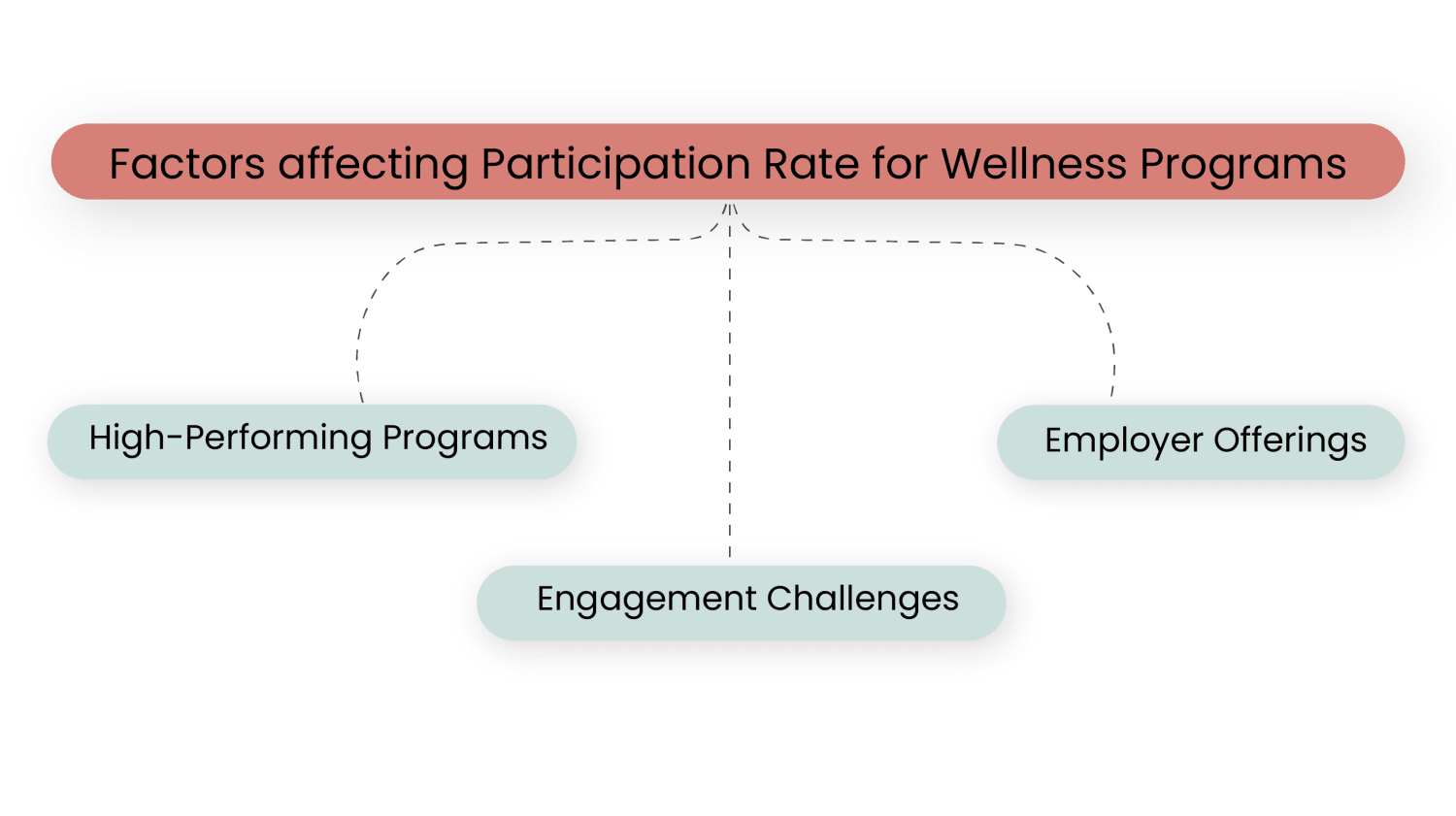
A good participation rate sits at around 20 to 30% for sustained engagement, with roughly 40% as the median across organizations. Well-designed, gamified programs go far beyond that, especially when they pair strong communication with visible leadership support.
Vantage Fit clients regularly clear that bar. Here is how recent programs compare against the 20 to 30% industry norm:
| Organization | Program | Reported rate |
|---|---|---|
| Serum Institute of India | Wellness program | 99% participation |
| POSOCO | "Walking Miles, Losing Inches" walkathon | 97% participation |
| ISKL | Wellness challenge | 95% participation |
| Decision Foundry | Wellness program | 89% participation |
| IBS Software | "March to Fitness" (28-day) | 88% engagement |
| Brazosport ISD | "Fit Wars" (2-week) | 86% engagement |
| Tata Motors | "Step & Stride" challenge | 59% engagement |
The pattern is consistent: participation climbs when the program is easy to access, gamified, and visibly backed by leadership. The programs that struggle are usually the ones that attract only employees who are already health-conscious, leaving the people who would benefit most on the sidelines.
Reaching and sustaining these benchmarks becomes much easier with the right infrastructure in place.
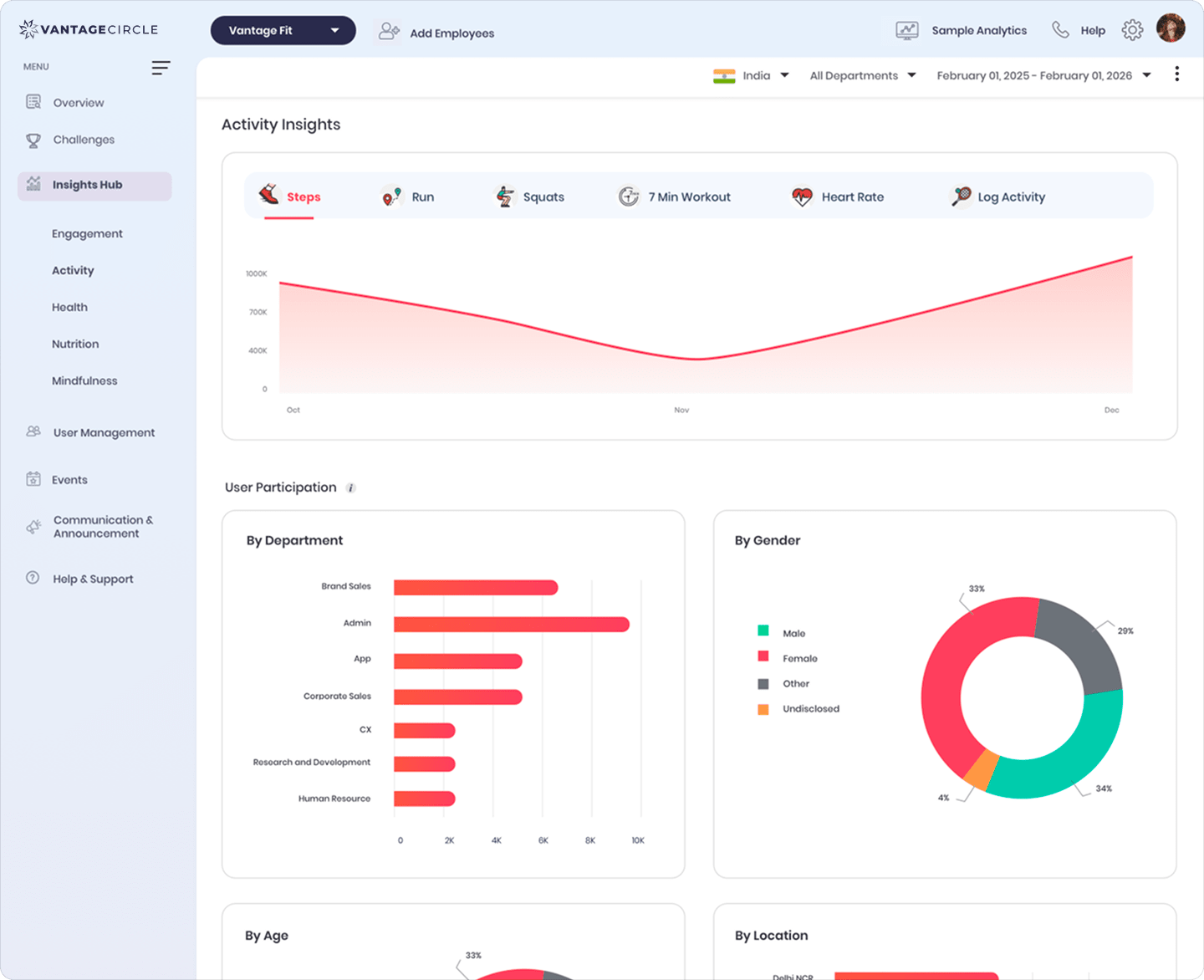
Vantage Fit also gives HR teams a real-time view of participation, showing who is enrolled and who stays active across departments, countries, age groups, and more. With built-in audience filters, teams can tailor challenge invites and communication to specific employee groups, while automated email nudges help keep engagement steady throughout the program.
Strategies to Motivate Employees and Increase Wellness Program Participation

Getting employees excited about prioritizing their health can be a challenge. But fear not! With a little creativity and understanding, you can transform wellness from a chore into a coveted perk.
Let's dive into strategies to boost employee engagement in wellness programs:
1. Personalize the Wellness Experience:
Everyone's different, and so are their wellness needs. Offering a one-size-fits-all approach to wellness is like giving everyone the same meal. While some might love it, others will be left hungry.
To truly support employee well-being, you need to provide a buffet of options. From fitness classes to financial wellness, there should be something for everyone. This way, employees feel valued and understood, and they're more likely to find something that works for them.
To help them better, you can do health risk assessments and tests to know about their individual health conditions. You can also conduct one-on-one sessions wherein you appoint a professional therapist, and employees can confide in them the mental health issues that they are undergoing.
This data can then be used to prepare personalized wellness journeys for every employee. The procedure would be long, no doubt, but it will pay off.
To give you a hint let me make you think of this: when it's your birthday and you receive a handmade card, it makes you feel ten times better, doesn't it? Well, it shows that a little personalization goes a long way.
2. Form a Wellness Committee
A dedicated wellness committee can be a catalyst for creating a thriving wellness culture. At its core, a wellness committee brings leadership from within. Instead of wellness being a top-down mandate, it becomes a shared mission led by peers who understand the daily challenges and aspirations of their coworkers.
This shift in perspective can be incredibly powerful. When employees see their colleagues championing wellness, it feels more authentic and achievable. It's no longer about following rules, but about joining a community that cares about each other's well-being.
Moreover, the beauty of a wellness committee lies in its diversity. By bringing together people from different departments, roles, and backgrounds, you create a melting pot of ideas and perspectives.
With their on-the-ground insights, committee members can help create programs that are specifically tailored to the organization's unique culture and challenges, and gather real-time feedback for agile adjustments that keep the program relevant.
A committee also gives wellness a community to live in. Set up forums or wellbeing boards, both physical and digital, where employees swap tips and wins, and let the committee run team-based wellness challenges and corporate wellness events that turn wellness into a shared, communal experience.
Train all leadership and wellness committee members to serve as ambassadors for wellness programs, offering ongoing support to employee participants.
3. Lead by Example
Encourage leaders at all levels to actively participate in and promote wellness initiatives. This means more than just expressing verbal support; it's about being visibly and consistently involved. Leaders who prioritize their own health naturally become wellness champions for the entire organization.
For instance, imagine it's Wednesday afternoon, and the CEO is seen heading to the on-site gym or joining a lunchtime meditation session. This kind of visible participation helps create a workplace culture in which taking care of oneself is not just accepted but celebrated.
To reinforce this commitment, consider implementing "wellness hours" for leadership, where they visibly take time away from work to engage in health-promoting activities. This sets a powerful example and sends a clear message: "We're all in this together, and your well-being is important to us."
4. Incorporate Gamification
All work and no play makes Jack a dull boy.
And that's why adding a playful element to wellness programs can make them more engaging and fun.
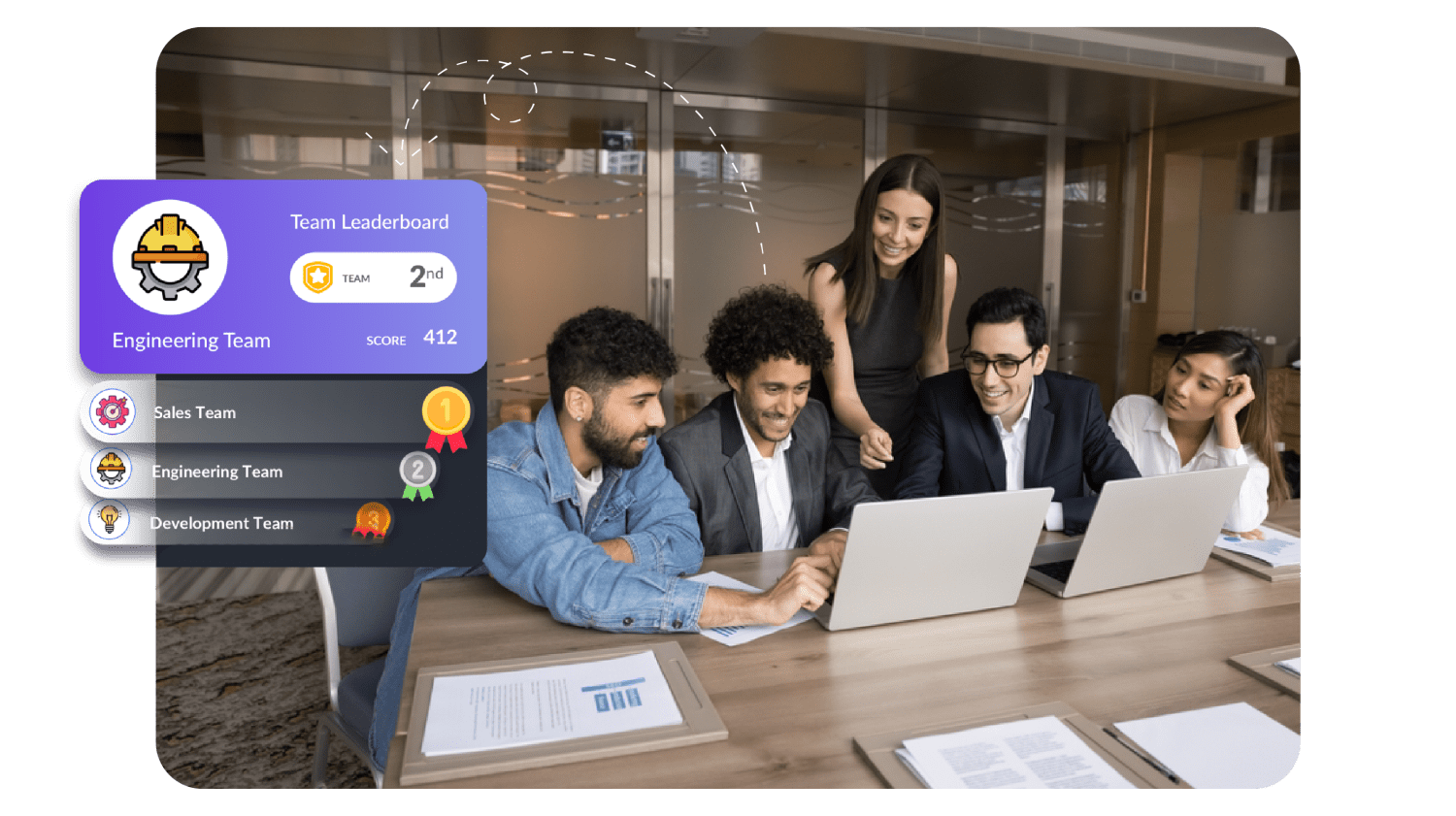
Create a points system where employees can earn rewards for participating in wellness activities, like attending fitness classes or completing health assessments. This adds a layer of motivation and makes the experience more enjoyable.
Organize team challenges to encourage collaboration and friendly competition. For example, set up interdepartmental step challenges or healthy recipe contests.
Use a digital platform where employees can track their progress, earn badges for their achievements, and see how they rank on leaderboards. This interactive approach keeps everyone involved and motivated. The effect shows up in the data: gamified challenges helped Wipro grow participation 3X, from 163 to 550 active users across three global challenges in 2025.
One client described exactly this effect. The easier it is for employees to access program details on their phones, the more motivated they become to join:
"The fact that our employees could easily download the application and access all minute details about the Fit-o-meter challenge on their phones motivated them to participate."
— Pramod Patil, Deputy Manager HR, KEVA
You can also consider seasonal or themed challenges to keep things fresh and exciting.
Ensure that the gamification elements are inclusive, allowing people of all fitness levels and abilities to participate and succeed.
5. Offer Meaningful Incentives
To truly motivate employees, it's important to offer incentives that enhance their well-being. Start with extrinsic rewards, like extra paid time off for reaching wellness goals or health insurance premium reductions for participating in activities.
As employees get involved, gradually shift the focus towards intrinsic rewards, emphasizing the personal health benefits and sense of achievement. It's crucial to address "What's In It For Me?" (WIIFM) so employees understand the direct benefits of their participation, such as improved health and reduced stress.
Avoid using negative incentives or penalties, as these can create a sense of coercion. Ensure all incentives comply with legal requirements to maintain trust.
Additionally, consider partnering with local wellness providers for discounted services and offering wellness gifts like fitness trackers or meditation app subscriptions.
The goal is to show that the company is willing to significantly improve employee health and well-being.
6. Communicate Effectively
Effective communication is at the heart of driving participation in wellness programs. To ensure that every employee is informed and inspired to join, it's crucial to develop a comprehensive, multi-channel communication strategy.
This approach should use a variety of platforms, such as email newsletters, intranet posts, physical bulletin boards, and company-wide meetings, to reach employees wherever they are.
Highlight success stories of employees who have benefited from the wellness programs, showing real-life examples of positive changes. These stories can inspire others and make the benefits of participation more tangible.
Regular "wellness spotlights" are another effective tactic. By planning these spotlights around a wellness calendar, you can keep the conversation fresh and rotating throughout the year. Mix in educational content too, such as wellness workshops, webinars, and short articles, so employees understand the why behind healthier habits and feel equipped to act on it.
The key is to weave wellness into the fabric of company dialogue, making it a regular topic of conversation and keeping it top of mind for everyone.
7. Include Extended Family in the Wellness Initiative

People are often more motivated to participate when their loved ones are involved. Most often, your employees might have an ailing parent or toddler to look after. And that's why the power of family involvement in wellness initiatives cannot be overstated.
When an employee sees their loved ones benefiting from and enjoying the program, their own commitment soars. Picture the impact of a wellness program that offers resources not just for the employee, but for their college-aged child struggling with stress, or their spouse grappling with work-life balance.
By addressing these interconnected aspects of an employee's life, you're alleviating the mental and emotional burdens that can significantly affect workplace performance and satisfaction.
Ensure your program offers a diverse range of activities that cater to all ages and abilities.
8. Give Employees a Choice
Giving employees the freedom to choose is essential in boosting participation in wellness programs. This choice manifests in two ways: the option to participate and the variety of activities offered within the program.
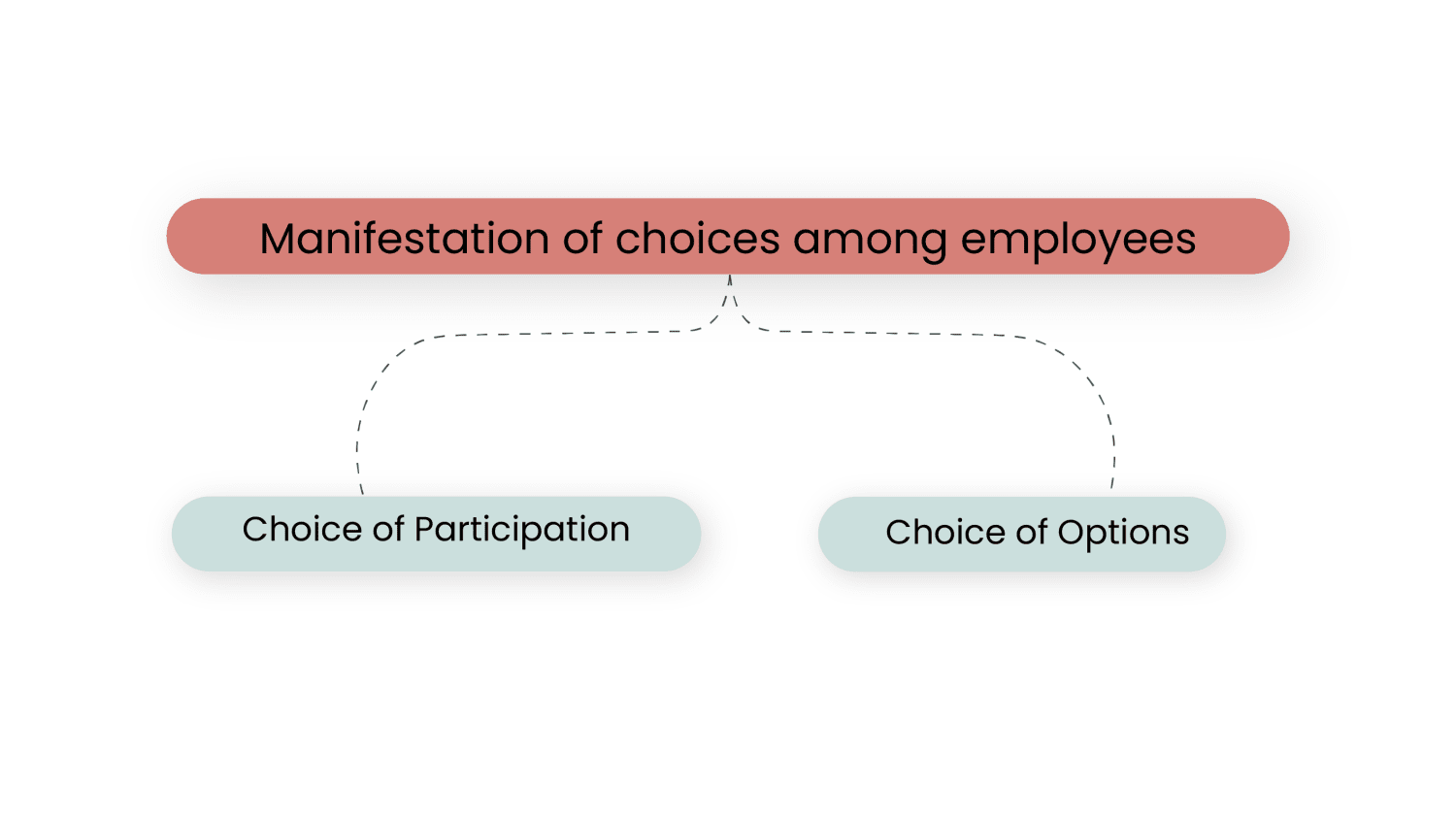
Choice of Participation
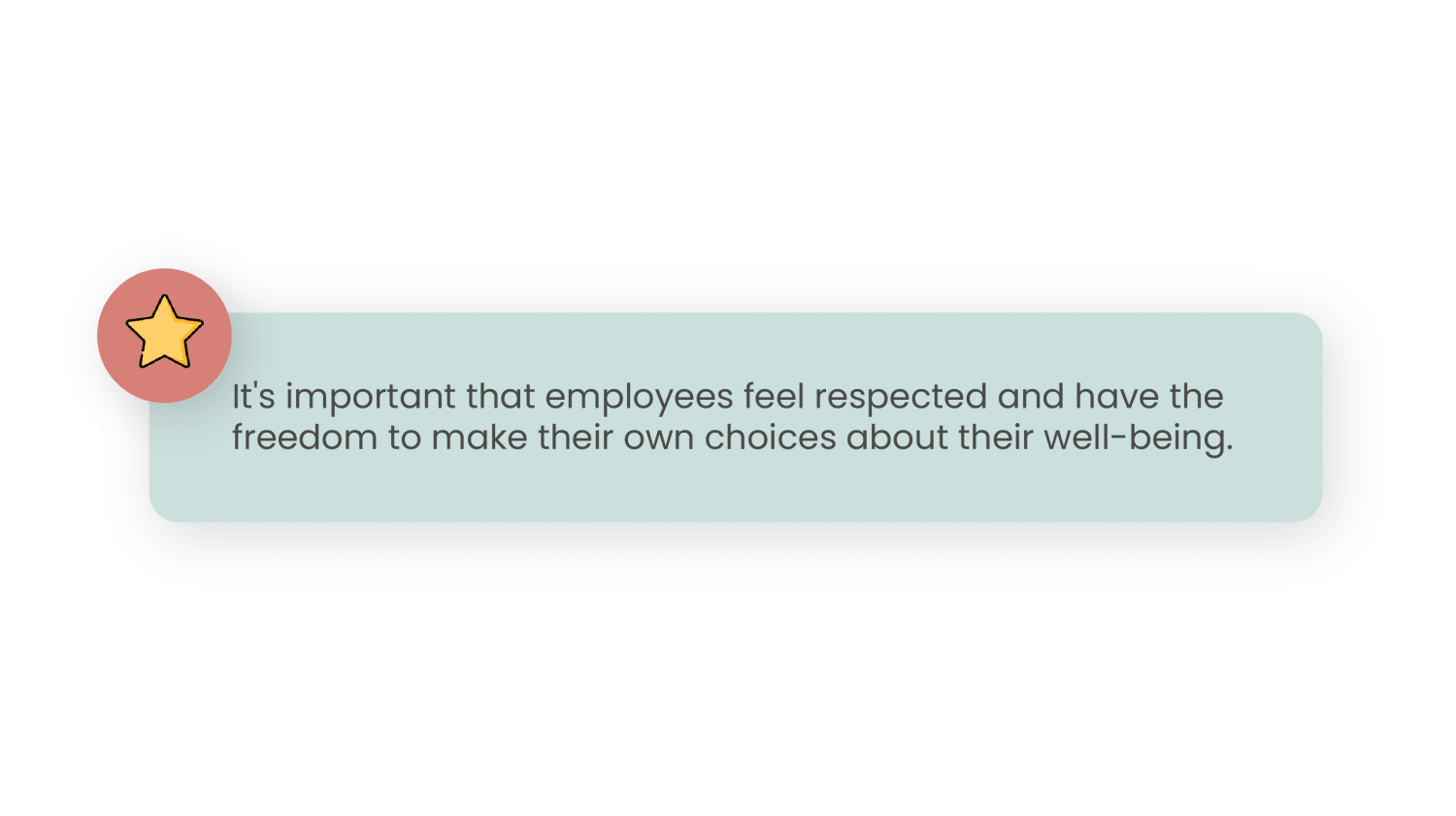
Allowing employees to decide whether to join wellness programs is fundamental. Everyone has different life situations, and sometimes, individuals may not be ready or able to engage in additional activities. They might be going through personal challenges, health issues, or simply prefer to manage their wellness in their own way.
By not penalizing employees for opting out, companies show respect and understanding. Punishing those who choose not to participate can add unnecessary pressure and may even push them away from the organization.
Instead, it's more effective to encourage participation through positive incentives, creating a welcoming environment where employees feel comfortable joining in when they're ready.
Choice of Options
Offering a broad range of wellness activities caters to the workforce's diverse interests and needs. This variety allows employees to pick what resonates with them the most, making it more likely they'll engage and enjoy the experience.
It's about finding something that fits each person's lifestyle and preferences, whether they're looking to relax, try a workplace wellness challenge, or learn more about healthy living. When employees can choose activities that align with their interests and schedules, they feel more in control and are more likely to stick with the program.
9. Implement an Effective Marketing Approach
And last but not least, implement a top-notch marketing approach to seal the deal, one that draws from proven corporate wellness strategies to build sustained interest over time.
Effective marketing can be the ultimate secret weapon in boosting wellness program participation. The key is to create a compelling narrative that resonates with employees on a personal level.
Start by developing a strong brand identity for your wellness program. This branding should reflect your company's values while speaking directly to your employees' aspirations for better health and well-being.
Next, harness the power of storytelling. Share real, relatable success stories from employees who've benefited from the program. Diversify your communication channels to ensure your message reaches everyone. Combine eye-catching visuals, engaging videos, and concise text across various platforms - from company-wide emails to physical posters and digital signage.
You can also invite speakers, renowned physicians, and therapists. Look for collaboration opportunities by reaching out to people at events and on platforms like LinkedIn.
Create excitement through strategic marketing campaigns. Use teaser content to build anticipation for new initiatives. Launch major program components with the fanfare of special events.
Finally, make participation irresistibly easy. Every piece of marketing should include a clear, simple call to action. Whether it's joining a challenge or signing up for a class, the path from interest to action should be smooth and obstacle-free.
How Can You Fuel Long-Term Participation in Your Wellness Program?
Getting employees excited about wellness is one thing; keeping that enthusiasm alive is another. To truly make a difference, we need to create a culture of wellness where it's seen as an essential part of work life, not just a passing fad.
Below are some great strategies to help you fuel long-term participation in your wellness program:
1. Program Design
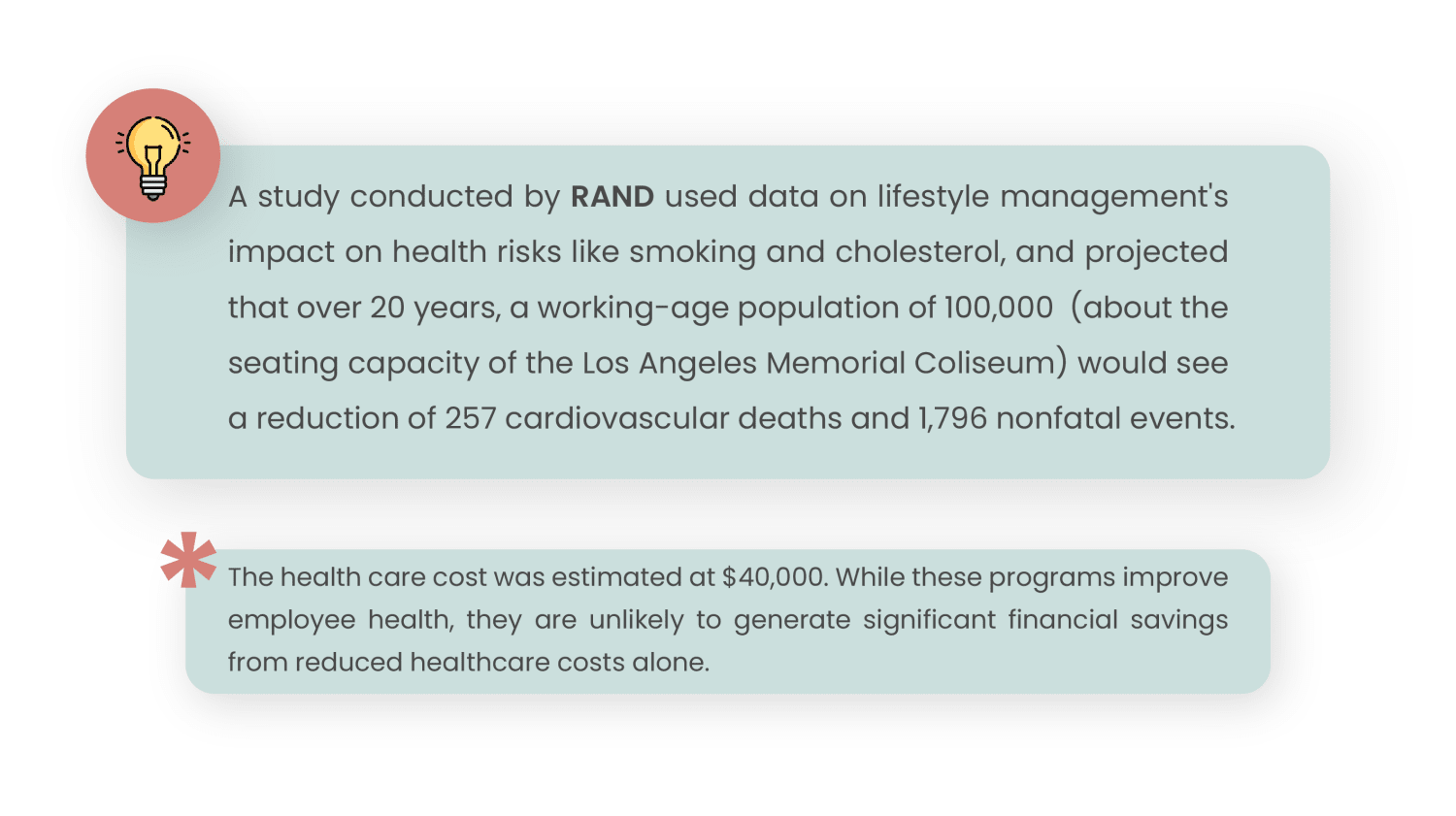
According to a Rand Report, employees weigh factors beyond incentives, like the design and accessibility of the program, when deciding whether to join. Good design comes down to two things.
First, the user experience: a fast, mobile-friendly wellness platform with smooth navigation removes the friction that quietly kills participation. Second, functionality and inclusivity: make sure the activities, resources, and health-tracking features are relevant to your whole workforce, not just one segment. Survey employees, find the gaps, and keep refining, because a program built around real needs is the one that lasts.
2. Ongoing Feedback and Adjustments
It's essential to continuously gather feedback from participants to understand what's working and what isn't. Regular employee wellness surveys, focus groups, or informal check-ins can provide valuable insights into employee preferences and challenges.
Using this feedback to make adjustments ensures the program stays relevant and responsive to employees' evolving needs. This iterative process demonstrates that the organization is genuinely invested in the well-being of its employees, which can boost participation and engagement.
3. Integration with Company Goals
When employees see how wellness fits into the bigger picture of the company's success, it makes a world of difference.
By connecting wellness initiatives to overall company goals, employees are more likely to see the value in participating. For example, if a company is focused on innovation, highlighting how stress reduction and mental well-being can boost creativity can be a powerful motivator.
When employees feel like they're contributing to the company's success while also taking care of themselves, it's a win-win situation. Making this connection clear can transform wellness programs from optional extras to essential components of an employee's role.
Can Employers force Employees to Participate in Wellness Programs?

No, employers generally cannot force employees to participate in wellness programs. Employees are more likely to engage in wellness programs they see as voluntary and supportive rather than coercive.
While employers can encourage participation by offering incentives, making these programs mandatory can lead to legal and ethical issues, particularly concerning employee consent and personal health information.
Additionally, fostering a supportive culture where participation is encouraged rather than enforced helps build trust and shows genuine care for employee well-being.
Suggested Read: 9 Ways To Create A Healthy Work Environment To Improve Employee Health
Many successful programs leverage social support and employee input to foster a culture of wellness rather than imposing participation.
Wellness programs should be about empowerment, not enforcement.
Are Employees Legally Bound to Participate in Wellness Programs?
No, employees are not legally bound to participate in wellness programs. Think of it like being invited to a community yoga class: it's encouraged, but you're not obligated to attend.
In fact, wellness programs must be voluntary to comply with regulations like The Americans with Disabilities Act (ADA) and The Genetic Information Nondiscrimination Act (GINA). Employers cannot penalize employees for non-participation.
Incentives can be used to encourage participation, but they must be reasonable and not constitute a veiled penalty that would make the program involuntary.
Frequently Asked Questions
How do you measure wellness program participation?
Track enrollment first, then the metric that matters more: sustained active users over time, not a one-off sign-up count. Vantage Fit gives HR a real-time view of who is enrolled and who stays active across departments, countries, and age groups, so teams can target nudges wherever engagement starts to slip.
What incentives work best to boost wellness program participation?
A mix works best. Start with extrinsic rewards like extra paid time off, gift cards, or insurance premium reductions to get people in the door, then shift toward intrinsic motivation by showing the personal health benefits. Keep rewards modest and voluntary, since incentives that feel coercive tend to backfire.
How do you get remote and frontline employees to participate?
Remove the access barrier. Offer mobile-first, flexible options that do not depend on fixed hours or being on-site, communicate through channels these employees actually use rather than the office intranet alone, and run team-based challenges so distributed colleagues can take part together.
What is the difference between participation and engagement in a wellness program?
Participation measures how many employees join or sign up. Engagement measures how actively they keep using the program over time. A high sign-up rate means little if activity drops off after week one, so the goal is sustained engagement, not just initial participation.
Final words
At Vantage Fit, we're passionate about helping companies like yours make wellness a natural part of daily life. We know that every team is different, and that's why we offer personalized solutions that fit the unique needs of your workforce.
Our goal is to help you create a wellness program that not only boosts employee morale and wellbeing but also becomes a cherished part of your company's culture.
If you're ready to bring more health and happiness to your workplace, Vantage Fit is here to support you. Let's work together to create a program that truly resonates with your employees and makes a lasting difference in their lives.
Reach out to us today and start building a healthier, more engaged workplace.